
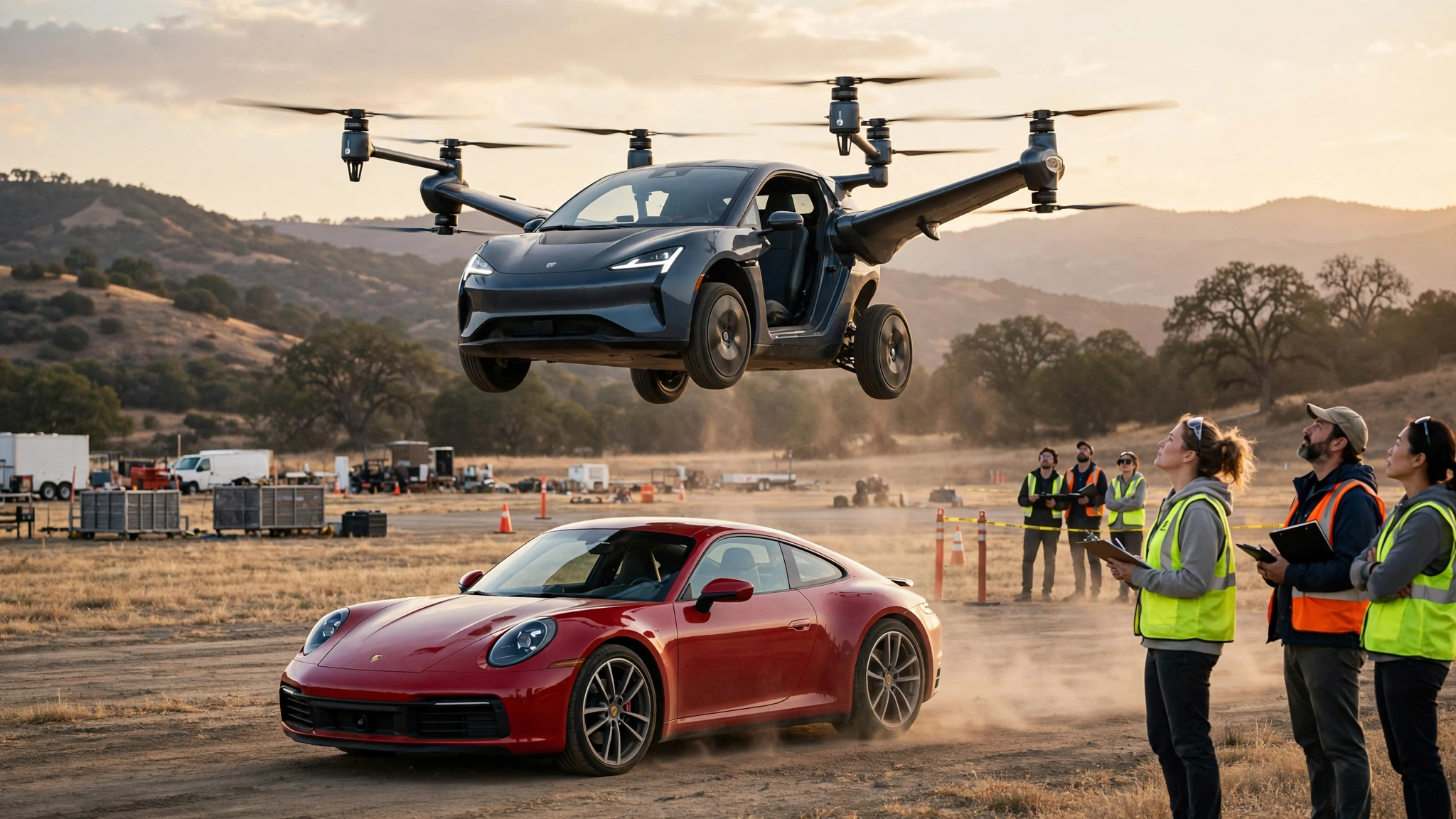
Every American kid who ever watched a Saturday morning cartoon knows the promise. You press a button, the car folds its wheels, and traffic simply stops being your problem. For generations that image lived where flying cars were supposed to live – in cartoons, in comic books, in the garage tinkering of dreamers who were told, politely, to build something practical instead. On October 15, a California startup tried to move that promise out of the cartoon and into a logbook.
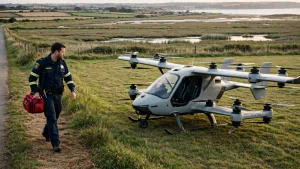
Alef Aeronautics released a video of its flying car lifting off vertically and flying over a parked Tesla Roadster and a Cybertruck. The company described it as its 1,000th logged flight. Not its first flight. Not a lucky hop. Its thousandth, built up flight by flight across its Model A and Model Zero demonstrator programs. That number is the most American part of the story, and also the least flashy.
A California logbook meets a Texas spectacle
The timing gave the day a split-screen quality that American culture does so well. On the same day as Alef’s video, Tesla showed its own Roadster becoming airborne at a demonstration in Texas, at a SpaceX facility near Waco. Reports describe the two-seat Roadster driving up a ramp, becoming airborne, performing a flip and landing nearby, with the lift coming from a compressed-air or cold-gas system rather than rocket fuel. Tesla quoted a 0 to 60 mph time of 0.81 seconds for the car.
One coast offered accumulation. The other offered theatre. California, home of the garage startup, produced a record book. Texas, home of the big demonstration, produced a moment built to be replayed. You need both impulses to understand why this category keeps Americans hooked. A country raised on county fairs and space launches understands spectacle. A country built by small workshops understands the logbook too.
Alef chief executive Jim Dukhovny leaned into the rivalry with a line that travelled fast. Welcome Tesla to the flying car race, he said – we have been here alone for eleven years. Coverage spread across US television affiliates and international outlets within 48 hours. Dukhovny, by his own account, was not annoyed by the giant arriving. He sounded relieved.
Why a rival made the dream feel bigger, not smaller
Dukhovny told reporters that Tesla’s arrival proves the market, establishes a separate flying car category, creates an industry that can argue for specific regulations, brings investor focus, helps the public compare technologies, and creates a benchmark to measure against. Read that as a cultural shift, not just a business quote. For eleven years, a personal flying car could be filed as one company’s eccentricity. Two companies, on the same day, turns eccentricity into a category – and categories are how America decides something is real.
That pop-culture filing system matters here. Americans have always sorted the future through stories first, products second. This site recently looked at Clayface and the very American art of the comic-book villain, a reminder that invented worlds shape what a country expects from the real one. The flying car spent decades in those invented worlds. The question now is whether it can hold a regular job outside them.
Owning the sky, the American way
Here is the distinction that sets this story apart from the air taxi race. Air taxis sell rides. You book, you board, you land, much like a very advanced cab. Alef aims to sell a vehicle you own – street-legal on the road, able to take off and hop over congestion in the air. That is a deeply American proposition. The car in the driveway has always stood for independence here, for leaving when you want without asking a timetable for permission. A flying car extends that same driveway logic upward.
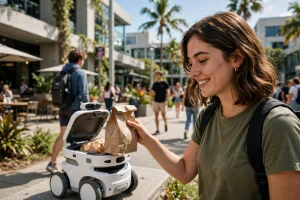
It also explains why the audience reaction runs hotter than the technical details might suggest. People are not only judging lift or range. They are judging a familiar freedom in a new form. The same appetite shows up in smaller, ground-level inventions arriving in daily life, from the robot valet and the end of circling the lot to household machines that promise to take chores off the family schedule. Americans tend to adopt the future one driveway, one parking lot, one kitchen at a time.
The honest gap between a video and a driveway
Enthusiasm should sit next to accuracy. Alef has previously reported a limited FAA special airworthiness certificate for an earlier phase of its program, issued in 2023 for exhibition, research and development purposes. That is a genuine step, and a narrow one. It is not full type certification, and it does not authorise carrying passengers for hire. Tesla’s Texas demonstration has not been confirmed as flying under full FAA aircraft certification either.
So no, you cannot buy your way over a traffic jam this month. What changed on October 15 is cultural as much as technical. A claim of 1,000 logged flights gives skeptics a number to test instead of a slogan to shrug at. A rival’s airborne Roadster gives the public a comparison to argue about at dinner tables and on morning shows. Argument, in American life, is often the first sign that an idea has moved in.
What to watch, if you grew up waiting for this
Watch certification first. Any move from limited approvals toward a fuller airworthiness pathway, by either company, will say more than another dramatic video. Watch flight cadence second. If Alef’s count keeps climbing past 1,000 at a steady pace, the logbook becomes harder to dismiss. Watch production signals third – tooling, facilities, customer-unit build activity – because a demonstrator becomes a product in workshops, not on stages. That slow, practical pattern is the same one behind quieter successes like a robot named Mobo that wants a seat at the family table, where the real test is living with people day after day.
There is a fitting symmetry in how the week played out. The giant supplied the flip. The startup supplied the thousand flights. American culture has room, and a soft spot, for both kinds of ambition. The dream that began in cartoons will only leave them for good when spectacle and repetition meet in the same machine – a car ordinary families can picture in an ordinary driveway, that also happens to fly. October 15 did not finish that story. It did something rarer. It made the story feel current again.





























Be First to Comment