
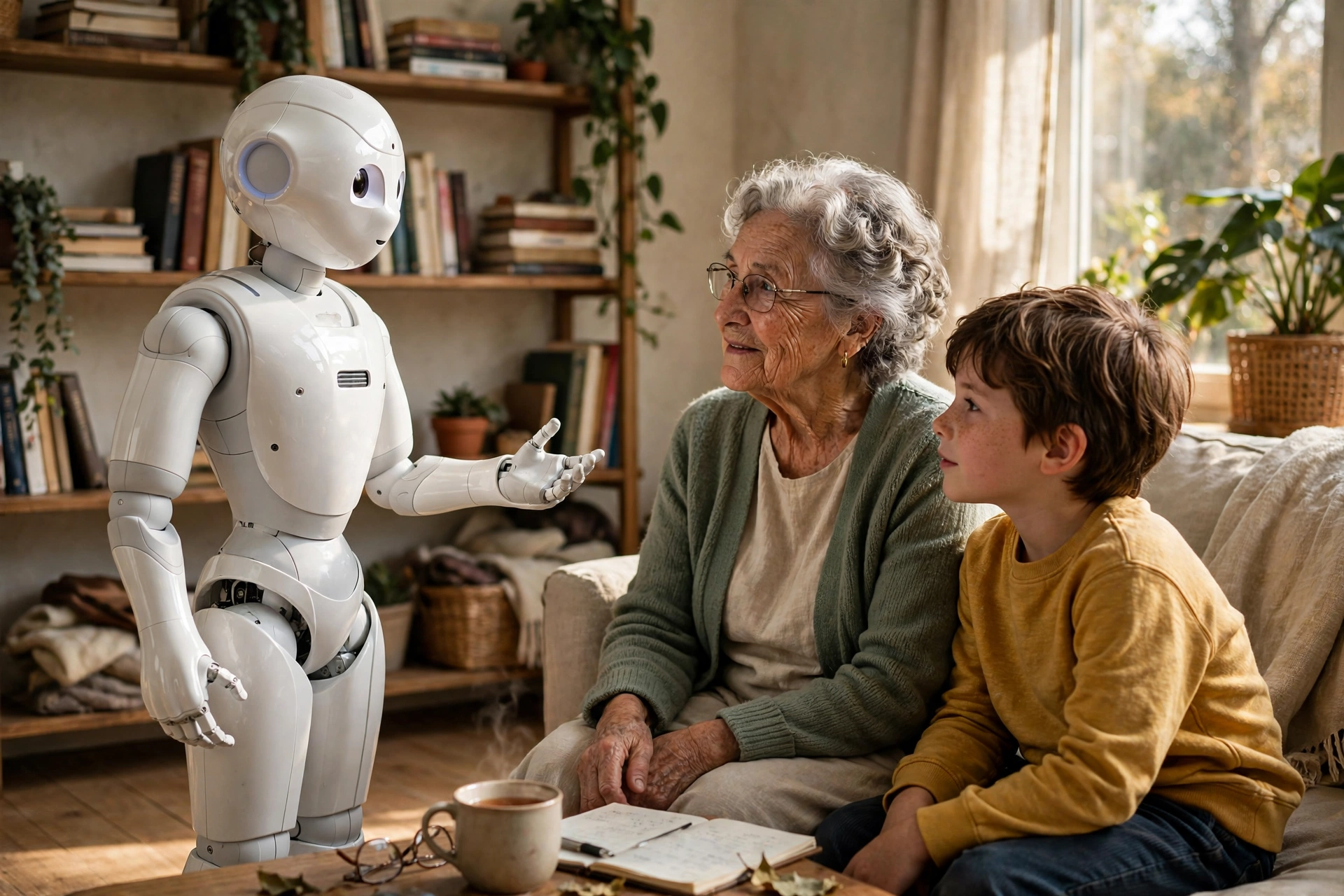
Every American generation gets a machine that moves into the house and quietly changes what home feels like. The radio took the parlor. The television took the living room wall. The smartphone took the kitchen counter, the nightstand and eventually the dinner table itself. On October 21, a new candidate will ask for a place of its own – not on a shelf, but standing in the room, remembering your name.
On October 17, AiMOGA Robotics announced that it will unveil Mobo, its first consumer-grade family companion humanoid robot, on October 21 in Wuhu, Anhui. The unveiling happens inside the 2026 Chery International User Summit, and global pre-orders open the same day. Mobo has been seen before, at the World Robot Conference and the World Manufacturing Convention. This time it is not an exhibit. It is a product a family can order.
Companionship is the job description
Most humanoid robots in the headlines were built for warehouses and factory floors. Mobo was built for conversation. It offers voice interaction, visual object recognition, schedule reminders and long-term memory. Put in ordinary language, it can look at what is in front of it and talk about it, remind you what you planned for the afternoon, and pick up a thread you started yesterday without making you explain yourself all over again.
That last part is the whole idea. Anyone who has lived with grandparents knows that being remembered is a form of care. A machine that forgets you between hellos feels like a gadget. A machine that follows up – how did that appointment go, did your granddaughter call back – starts to feel like a presence. AiMOGA runs that memory through its self-developed MoAgent system, which connects perception, interaction and execution, so what the robot sees and hears can shape what it does next, across days rather than minutes.
American homes have been rehearsing for this longer than we admit. Families already gather around shared stories the way they always have – a point this site made watching how the family movie night never really ended, it just changed screens. A companion robot is the next step in that same pattern: a shared presence in the room that everyone, from a seven-year-old to a seventy-year-old, relates to in a different way.
A car company learns to build for the living room
AiMOGA is not a garage startup. It draws on Chery’s global research and manufacturing system, and it says it has built 31 in-house research laboratories covering areas such as motion control and intelligent perception. The company calls the approach vehicle-robot synergy. Voice systems, cameras and decision software developed for intelligent cockpits and intelligent driving are being combined with robotic motion control, then built with a carmaker’s supply chain and quality control behind them.
That background matters for a simple reason. A car company knows how to build a complicated machine ten thousand times and have the ten-thousandth one work like the first. It also knows service networks, spare parts and what happens in year three, not just on launch day. Families do not adopt appliances that feel experimental. They adopt things that feel supported.
The company is not starting cold, either. Its robots already work in sales reception, traffic management support and medical guidance settings. Those are public, unpredictable places. The home is harder in one specific way – it is personal. Children wander off mid-sentence. Furniture moves. A dog crosses the room at the worst moment. A robot that can hold a conversation through all of that has passed a test no showroom can fake.
What Mobo could mean for the American household
Picture the households where this lands first. An older parent living independently, proud of it, who would accept a friendly daily check-in from a robot in the kitchen far more easily than a camera watched by relatives. Adult children two states away who worry less because reminders actually get delivered, out loud, by something standing in the room. A child who asks endless questions about the objects around her and gets patient answers tied to what she is actually holding.
None of that replaces people. It fills the gaps people cannot fill – the quiet Tuesday afternoon, the appointment nobody wrote down, the story a grandparent wants to tell twice. American families have always used technology that way, from the party-line telephone to the group chat that now carries the family through the week, much like the blocky worlds American families built together turned a game into a place relatives meet. The tool changes. The instinct does not.
There are honest questions to ask on October 21. Price will be one. Privacy in a home with a remembering machine will be another, and families should ask it plainly. But the direction is clear enough. When pre-orders open in Wuhu for an audience of owners who already drive the company’s cars, AiMOGA is betting that trust transfers – from the driveway to the living room, from the machine that takes you to family to the machine that keeps you company between visits. If that bet pays off, the most American room in the house is about to get a new resident, and it will know everyone’s name.


Be First to Comment