
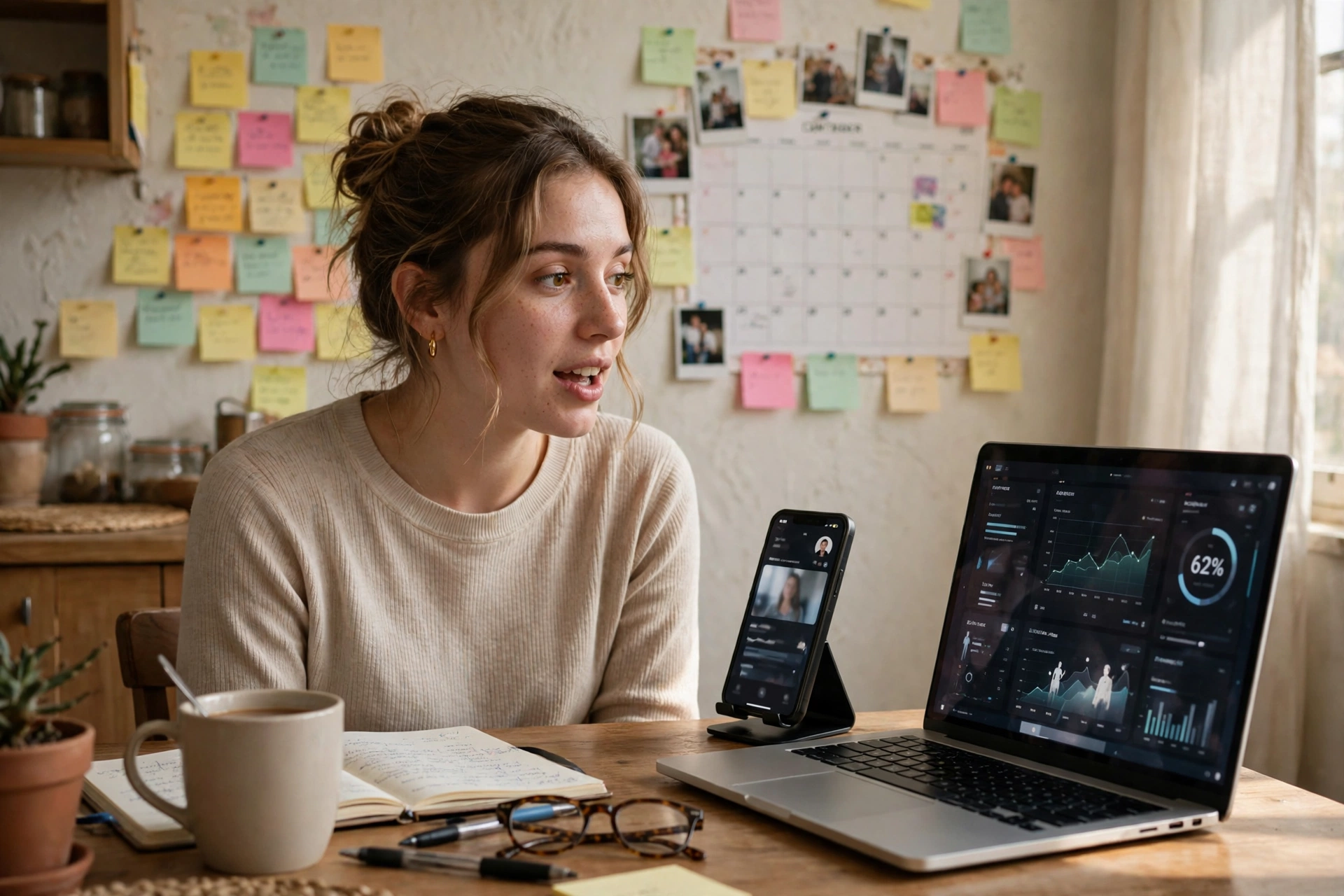
Ask any busy American parent what their phone still gets wrong and the answer is rarely about speed. It is about memory. You told the assistant about soccer practice on Tuesday. By Thursday it has forgotten the field, the coach and the fact that your youngest hates orange slices. Meta took direct aim at that daily frustration on November 6, launching Spaces inside its Muse app and upgrading Muse and Meta AI with models trained using Muse Wonder, the company most capable model series.
A Space is a small, living workspace you describe in plain words. A gift tracker for a big extended family. A school dashboard for three kids in three buildings. An order tracker for a side business run off a dining table in Ohio. Meta lists nine examples, seven personal and two for freelancers and small businesses. The Space can sit in the sidebar, hide when you do not need it, or show up on a schedule, so the work planner appears on weekdays and the weekend plan appears on Saturday morning. If you have connected other apps, it can refresh when an email lands or a calendar entry changes, instead of freezing at whatever you typed last week.
Why memory feels like a kitchen-table issue in America
American households run on shared logistics. Rides, permission slips, grocery lists, a grandparent pickup that only happens on Fridays. A tool that forgets those details is not clever, it is extra work. That is why the second half of the announcement matters more than the tidy new sidebar. Meta calls it Active Memory. The models were trained to sort temporary details from lasting ones, to reason across time, and to notice when something from weeks ago has gone stale and should stop shaping the answer.
The figures are Meta own, from Meta own tests, and no outside group has checked them yet. With that warning attached, they are hard to ignore. On the company Active Memory evaluation, the current Muse model used critical context correctly in 90 percent of tasks, up from 76 percent for the model before it. Meta describes that as a 2.4 times reduction in forgetting information that matters for your goals. On its Personal Superintelligence Index, the new model scored 47 percent against 38 percent for the one it replaces. Readers who followed America starting to talk to its AI as Muse Voice arrived nationwide will recognize the sequence. First the assistant learned to hold a conversation. Now it is being taught to hold the thread between conversations.
The stubborn streak has a name too
The other trait that came down from Wonder is Active Focus. When a plan hits a snag, a file that will not open or a step that no longer works, the model is trained to keep pushing toward the goal, try another route or ask a sharper question instead of stalling. Meta reports a 67 percent improvement in completing everyday tasks where unexpected issues crop up. Again, that is a vendor claim from an internal test. The fair way to judge it is on your own longest, messiest jobs over the next few weeks.
Mark Zuckerberg showed Spaces he had built for himself, including a barbecue game, an event tracker and a home-control dashboard. Alexandr Wang, who leads the Muse effort, said the new models went live the same day. Sharing a finished Space with another person is still being explored, Meta says, so for now these remain personal tools. That limit actually fits the American use case driving the feature. The first person who needs the family dashboard to work is the person holding the car keys.
Trust is the real American test
A remembering assistant only lasts in an American home if people trust what it keeps and what it drops. That question runs through the debate that starts when the news anchor is a robot and America asks new questions about who, or what, it is listening to. Meta has not published a model card, parameter counts or a method paper for these specialized models, and it has not said how often Spaces refresh or which outside connectors can feed one. Those are not small gaps.
Still, the direction is plain, and it feels distinctly homegrown. The winning assistant in this country will not be the one with the cleverest single answer on demo day. It will be the one that still remembers, next month, that practice moved to Thursdays, that the budget tightened, that Dad prefers a phone call to a text. Meta shipped the workspace and the memory on the same day. For families juggling a lot with a little help, that pairing is the story.
Also published on:
- News Today World – https://newstodayworld.org/breaking-news/2026/11/07/prince-mario-max-schaumburg-lippe-muse-spaces-turn-a-chat-into-your-own-little-app/
- The American Newsroom – https://theamericannewsroom.com/your-chatbot-finally-remembers-meta-gives-muse-a-home-of-its-own/
- American Pulse Journal – https://americanpulsejournal.com/at-american-kitchen-tables-an-ai-that-finally-remembers-the-family/
- Billionaire Herald – https://billionaireherald.com/muse-spaces-turns-personal-ai-into-a-product-people-can-use-daily/
- Newsy USA – https://newsyusa.com/for-american-households-muse-spaces-could-replace-a-dozen-forgotten-apps/
- American Morning Post – https://americanmorningpost.com/good-morning-your-chat-app-now-remembers-and-builds-tiny-tools-for-the-day-ahead/
- Revista Minutos – https://revistaminutos.com/muse-spaces-convierte-una-conversaci-n-en-tu-propia-peque-a-aplicaci-n/
- Le Miroir Francais – https://lemiroirfrancais.com/muse-spaces-transforme-une-conversation-en-petit-espace-de-travail-personnel/















Be First to Comment