
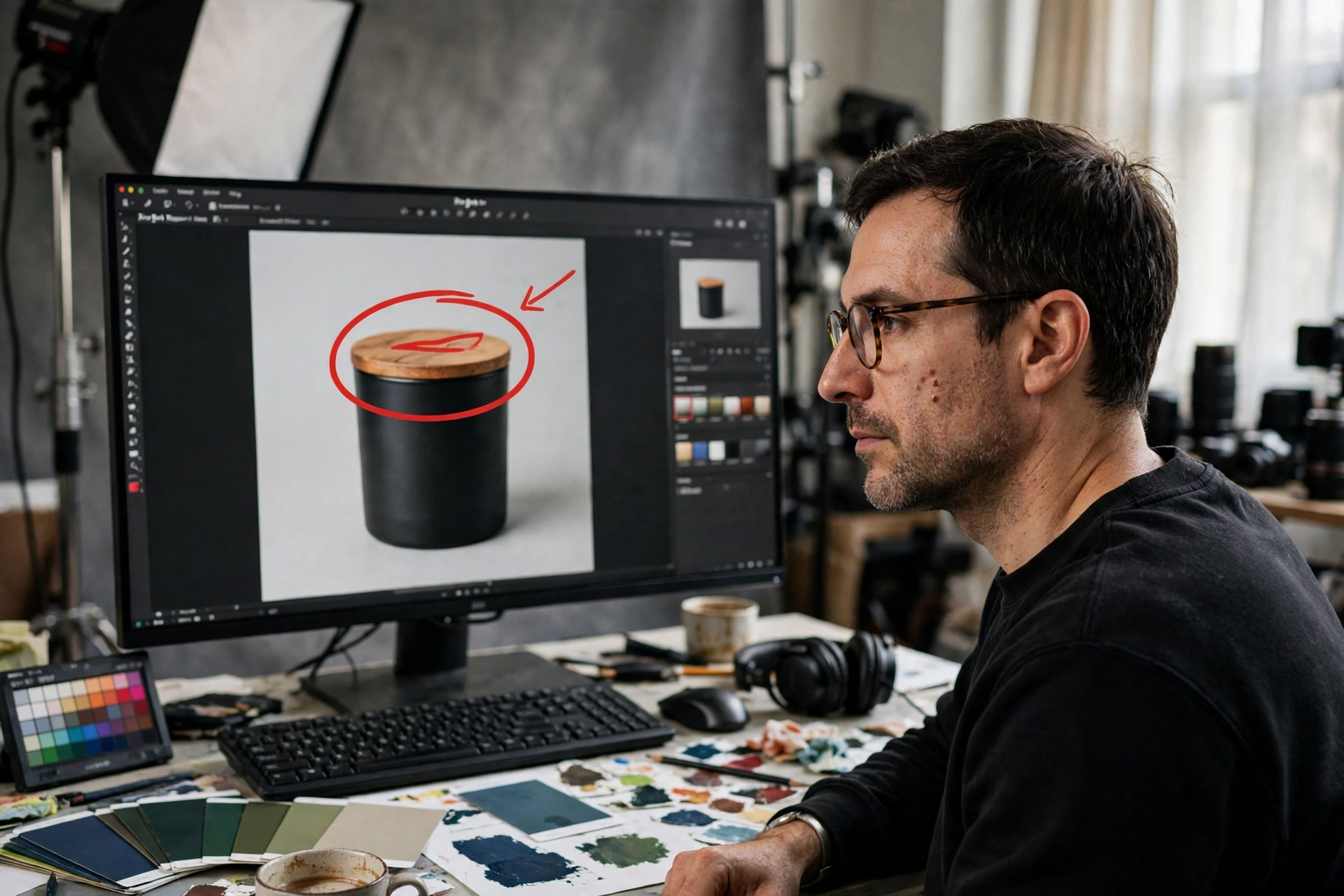
Ideogram released version 4.6 on November 19, and American product teams were among the first to test what native 4K editing changes in daily catalog work. The model renders up to 4,096 by 4,096 pixels, accepts up to five reference images, and offers a Precise Edit tool that changes a masked area while holding the rest of the frame at its original size.
That holding still is the point. A shopper-facing catalog rarely gets finished in one pass. A bag changes color on Monday. A label gets corrected on Tuesday. A background prop moves on Wednesday, and each earlier tool often nudged the model, the fabric or the lettering a little further from the approved original. Ideogram says 4.6 was built to stop that drift across a chain of edits.
Rapidata Results for Ideogram 4.6
On the Rapidata Multi-step Image Edit leaderboard, updated November 20, Ideogram 4.6 ranks first with 1,892 points. Ideogram 4.5 sits second at 1,866, ByteDance Seedream 5.5 third at 1,805, and Black Forest Labs FLUX 3 Image fourth at 1,697. Rapidata started with 199 photographs of real people, applied five edits in sequence to each photograph, and asked human evaluators which face stayed closest to the original.
The lead over 4.5 is narrow. The gap is 26 points, and the uncertainty ranges around both scores are about 30 points, so the two versions overlap on this measure. The distance to the third and fourth entries is larger. The test measures identity drift after repeated edits. It does not, on its own, settle questions about color accuracy or text inside an image.
American creative work has a particular shape that makes this test relevant. A national retailer may shoot one hero image in Los Angeles and then adapt it for regional stores, seasonal pages and partner sites over several months. Each adaptation is a small edit, and small edits add up. Readers who followed the Uber driverless rides story on this site will recognize the same pattern in a different field, a technology that has to stay reliable not once but across repeated daily use.
Pricing in the Ideogram API
The company lists two endpoints, Generate and Precise Edit, in its web app and its v2 REST API. Generate creates an image from text or modifies one from reference inputs. Precise Edit works on a defined area, with the mask optional, and returns the result at the original dimensions. Four quality tiers run from very low to high, and the lowest tier caps output at 2K.
Price explains how teams will actually use it. Generate at 2K runs from $0.008 per image at the lowest tier to $0.10 at high quality, and up to $0.20 at 4K. A high quality Precise Edit at 4K costs $0.60 per image. A five-step chain at that top rate comes to about $3.00 for one finished image, which pushes a sensible workflow toward checking each step before paying for the next one.
Ideogram also publishes its own internal figures, and those figures are company-reported. At high quality, the company says character consistency rose from 69 percent in version 4.5 to 85 percent in 4.6, exact color matching rose from 46 percent to 83 percent, and masked edits rose from 82 percent to 90 percent. The model page does not define what counts as a usable result, so the numbers are best read as direction rather than as an independent measurement.
For a catalog manager, color is the number that lands first. Matching an item to a brand hex code without repainting the whole scene is routine work, and it is also the work where a small drift forces a reshoot or a long correction session. The same concern for a stable subject across changing instructions appeared in this site’s look at The Matrix 5 and the questions that series still raises, though there the subject was a story world rather than a product photograph.
Ideogram sells access to image models from other providers, including OpenAI and Google, through the same API surface. That detail matters for American studios that already hold several vendor accounts. A team can route a masked product edit to 4.6 and a different kind of image to another model, through one account and one billing relationship.
No open-weight version was announced in the launch material, and no independent generation leaderboard result was included beyond the Rapidata editing board. Buyers who rely on text accuracy inside images, a strength in earlier Ideogram versions, will want to run their own test set against 4.6 before moving a contract. The model is available now in the web app and through the API, and the next check for most teams will be simple and practical, running a real catalog page through five edits and comparing the last frame with the first one approved.
This story also appeared in News Today World, Manhattan Mogul, Revista Minutos, Le Miroir Francais, Fashion Weeks and China Daily News.





































Be First to Comment