
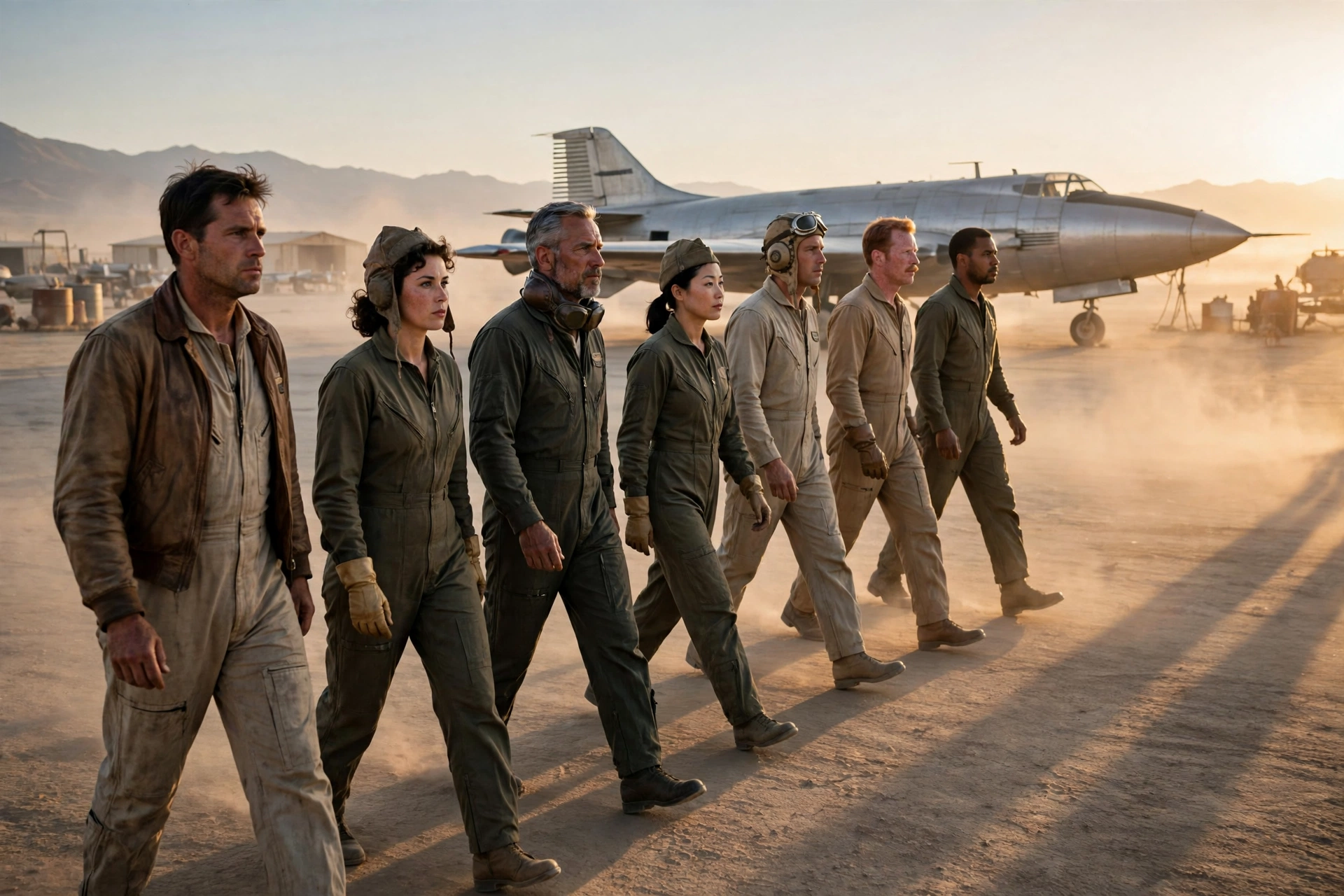
The Right Stuff arrives on 4K Ultra HD and Blu-ray from the Criterion Collection today, Tuesday, November 24, 2026. Philip Kaufman’s 1983 film runs 193 minutes and adapts Tom Wolfe’s 1979 book about the Mercury astronauts and the test pilots who preceded them. The new edition presents a 4K digital restoration supervised and approved by the film’s director of photography, Caleb Deschanel, with the picture offered in Dolby Vision HDR. Few American stories have been retold as often as this one, and few retellings hold up as well as Kaufman’s.
Warner Bros. released the film in October 1983 to strong reviews and modest initial business, and then it simply refused to go away. It won four Academy Awards, for editing, sound, sound effects editing and the original score by L. William O’Connell and Bill Conti. The American Film Institute placed it on its list of the greatest American films, and the Library of Congress added it to the National Film Registry in 2013. The Criterion edition, priced at $49.95 for the 4K combo pack, is the home-video version of that registry honor.
Yeager at Edwards, the Seven in the capsules
Also on this site: Drone Deliveries Join Everyday Life in Mt. Juliet, Tennessee, Palm Desert Crowns 18 Champions in a Lagoon and Sam Spade at 85, the Detective Who Set America’s Template.
The film’s structure is a double portrait, and the doubling is the American point of it. One strand follows Chuck Yeager, played by Sam Shepard with a laconic ease no other actor could have managed, breaking the sound barrier in 1947 and flying test aircraft out of Edwards Air Force Base while history quietly happens around him. The other follows the seven Mercury astronauts, among them Scott Glenn as Alan Shepard, Ed Harris as John Glenn and Dennis Quaid as Gordon Cooper, as NASA turns them into the most famous men in America. One group did the flying in obscurity. The other did it on live television, and Kaufman keeps both strands honest about the difference.
Kaufman, who wrote and directed, lets the astronauts be brave and competitive and vain, lets the press coverage be a circus, and gives the wives, played by Barbara Hershey, Pamela Reed and Veronica Cartwright among others, the fear that the program’s publicity machine had no use for. The flight sequences still astonish, because Kaufman fused practical effects with genuine NASA archival footage, and because Deschanel shot the desert and the sky like a painter rather than a technician.
The sound design is half the experience, which is why the audio options on this disc matter. Criterion includes the film’s 70mm 5.1 surround mix in DTS-HD Master Audio, alongside a 5.1 remix and the original 2.0 surround track, and the X-1 sequences and Glenn’s orbital flight, with its mysterious fireflies, are reference material for home theaters. National stories retold well are a running theme in this journal, from the Mercury Seven to Northwestern’s three-peat and the dynasties college sport keeps producing.
Bonus material carries over nearly everything from Warner’s well-regarded 2003 two-disc special edition: scene-specific commentaries with cast and crew, deleted scenes, and three documentaries covering the production, the real Mercury program and John Glenn’s life, including the PBS film John Glenn: American Hero. Criterion adds a more recent interview with Kaufman conducted by the Academy Film Archive and three new pieces with members of the post-production team, which suits a film whose editing and sound work won its Oscars. Wolfe’s book spent years on bestseller lists and changed how Americans wrote about astronauts, and the film is one of the rare adaptations that matches its source in reputation. The edition is in stores and shipping from today, November 24.
Wolfe called the quality his book chased by the title phrase itself, an unnameable mixture of courage and composure that the test pilots treated as a professional standard. The film keeps that idea at human scale by staying with the Edwards strand, where the flying was done without cameras and the recognition went to other men. That tension, between the work and the fame, is the most American argument in the picture, and it is why the film still gets assigned, quoted and argued about more than forty years on.
Readers can also find this report at News Today World, Le Miroir Francais, Schaumburg Post, Revista Minutos, China Daily News, Mario-Max Magazine.






















Be First to Comment