
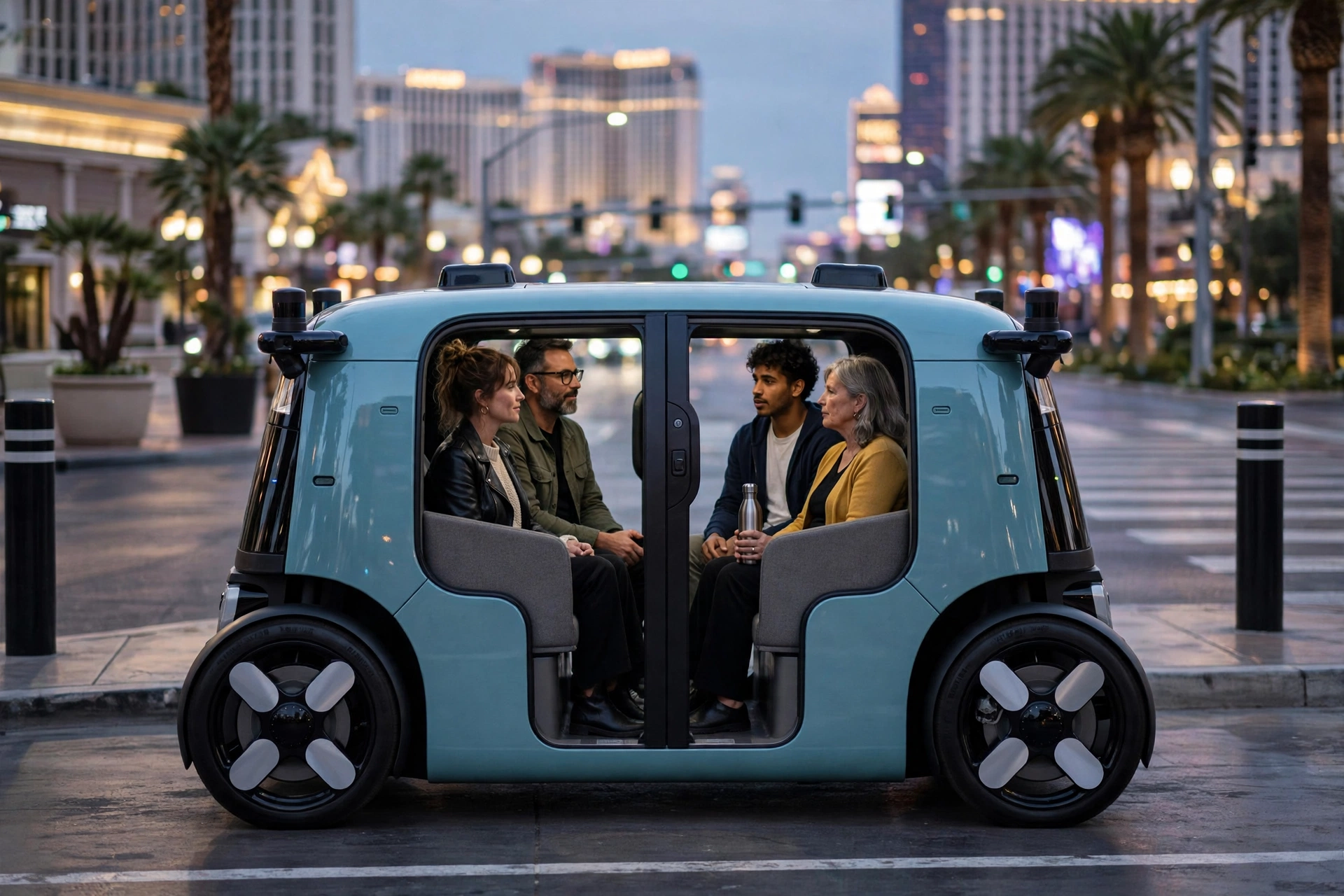
Every American city has a night when it tries to prove something about itself. In Las Vegas, that night now comes with a starting grid. Zoox, the Amazon-owned robotaxi company, signed a multi-year partnership with the Formula 1 Las Vegas Grand Prix on Thursday, November 5, becoming the event’s official autonomous ride-hail partner. From 2027, its driverless cars will run rides to and from Grand Prix Plaza, with a dedicated pickup and drop-off zone built for the job.
This year’s race weekend runs November 19 to 21, and Formula 1 extended the event in June to keep it in Las Vegas through 2037. That long contract matters for the culture of the place. The Grand Prix is not a visiting circus anymore. It is becoming part of the city’s yearly rhythm, the way a county fair or a college homecoming settles into a calendar and starts to shape how people plan their fall.
The American art of leaving the venue
Ask anyone who has left a ballpark, a speedway or a stadium after dark. The event is only half the memory. The other half is the walk to the car, the packed sidewalk, the long wait at a curb while thousands of people want the same ride at the same minute. Zoox seems to understand that American ritual. Its plan for 2027 centers on a defined zone at Grand Prix Plaza, not just cars circling nearby streets and hoping riders find them.
The company already practices that discipline around Las Vegas. It runs dedicated pickup zones at MGM Resorts properties, the Sphere, T-Mobile Arena and Harry Reid International Airport. Testing in the city began in 2019. Free public rides on the Strip started in September 2025, and paid rides began on August 10 this year. In other words, Zoox learned the city’s event nights first, one arena crowd at a time, before it attached its name to the biggest weekend of all.
That pattern fits a broader shift in how Americans meet new transport. As this journal noted when America rides in robotaxis while Europe gets its first close look, people here tend to accept a new vehicle after they have used it on an ordinary errand, not after they have watched a presentation about it. A ride home from a race is about as ordinary and as stressful as an errand gets.
A small lounge with no steering wheel
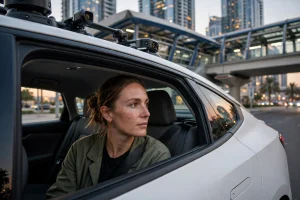
The vehicle itself helps explain the appeal. The Zoox robotaxi is bidirectional, with no steering wheel and no pedals, and it seats four passengers facing each other. Sit in that layout and the social logic changes. You are not staring at the back of a driver’s seat. You are talking to the friends across from you, still arguing about the last lap, while the car handles the traffic you would rather forget.
That face-to-face cabin speaks to something deeply familiar in American life: the ride as part of the night out. The diner stop after a concert. The drive home after a high school game, windows down, everyone replaying the same play. Zoox has built a cabin that keeps the group together instead of splitting it into a front seat and a back seat. Technology, at its best, protects the ritual instead of replacing it.
Regulators have given that unusual design room to work. In July, the National Highway Traffic Safety Administration granted Zoox an exemption to commercially deploy its purpose-built robotaxis, the first time the agency allowed a vehicle without traditional human controls to charge passengers. The exemption runs through July 31, 2028 and covers up to 2,500 vehicles in any 12-month period.
Showing up in the app Americans already open
For all the race branding – Zoox will appear between Turns 15 and 16, on the rooftop LED and around the Paddock Club this year, present the Atlassian Williams fan zone at New York-New York and host a hospitality space at Resorts World’s Turn 12 – the quieter step may matter more to daily culture. Uber chief executive Dara Khosrowshahi said on the company’s third-quarter call on Wednesday that Zoox will launch on Uber in Las Vegas later this month. The partnership was announced in March, with Los Angeles to follow next year, and it is Zoox’s first deal with a third-party ride-hailing platform.
No new app. No waitlist. Just another choice inside a habit millions of people already have. Zoox chief executive Aicha Evans said this week that the company operates about 150 robotaxis across several US cities, including San Francisco and Las Vegas. Independent trackers, counting only vehicles spotted in service, put the in-service number at 62 on Thursday. Both figures describe a fleet that is still modest next to Waymo, and Zoox has not disclosed the financial terms of the Grand Prix deal or whether the 2027 race rides will be paid or limited to ticket holders.
Still, think about the sequence Las Vegas is offering the rest of the country. First a car with no driver earns a place at the airport and the arena. Then it joins the app on your phone. Then, in November 2027, it waits at a marked curb while a Grand Prix crowd pours into the night, everyone tired, happy and ready to get home. If that ride feels normal, something in American life will have quietly changed – not with a speech, but with a pickup zone that worked.
Watch the Short on YouTube:
Also published on:
- News Today World – https://newstodayworld.org/breaking-news/2026/11/07/prince-mario-max-schaumburg-lippe-zoox-robotaxis-las-vegas-grand-prix/
- Newsy USA – https://newsyusa.com/las-vegas-gives-american-robotaxis-their-biggest-stage-yet/
- American Morning Post – https://americanmorningpost.com/morning-brief-zoox-takes-a-seat-at-the-las-vegas-grand-prix/
- American Pulse Journal – https://americanpulsejournal.com/when-the-grand-prix-ends-a-robotaxi-takes-you-home/
- Revista Minutos – https://revistaminutos.com/los-robotaxis-de-zoox-se-suman-al-gran-premio-de-las-vegas-con-zona-propia-desde/
- Le Miroir Francais – https://lemiroirfrancais.com/les-robotaxis-zoox-rejoignent-le-grand-prix-de-las-vegas-avec-des-trajets-d-s-20/








































Be First to Comment