
Raupo and native sedges are returning on their own to ground at Te Rauakaaka Nature Reserve that exotic vegetation dominated until recently, Environment Canterbury said in an update dated November 24, 2026. A new channel has let tidal water flow back into the restored wetland, the site is holding water again, and native plants now line both banks of that channel.
Te Rauakaaka sits inside the Waimakariri River Regional Park in Canterbury, New Zealand. The order of the work was straightforward. Water came first, because a wetland cut off from its water regime cannot function as a wetland. The channel reconnected the site to the tide, planting followed along the banks, and then the site began contributing on its own. Raupo and sedges seeded into places where staff had expected to keep planting by hand for longer.
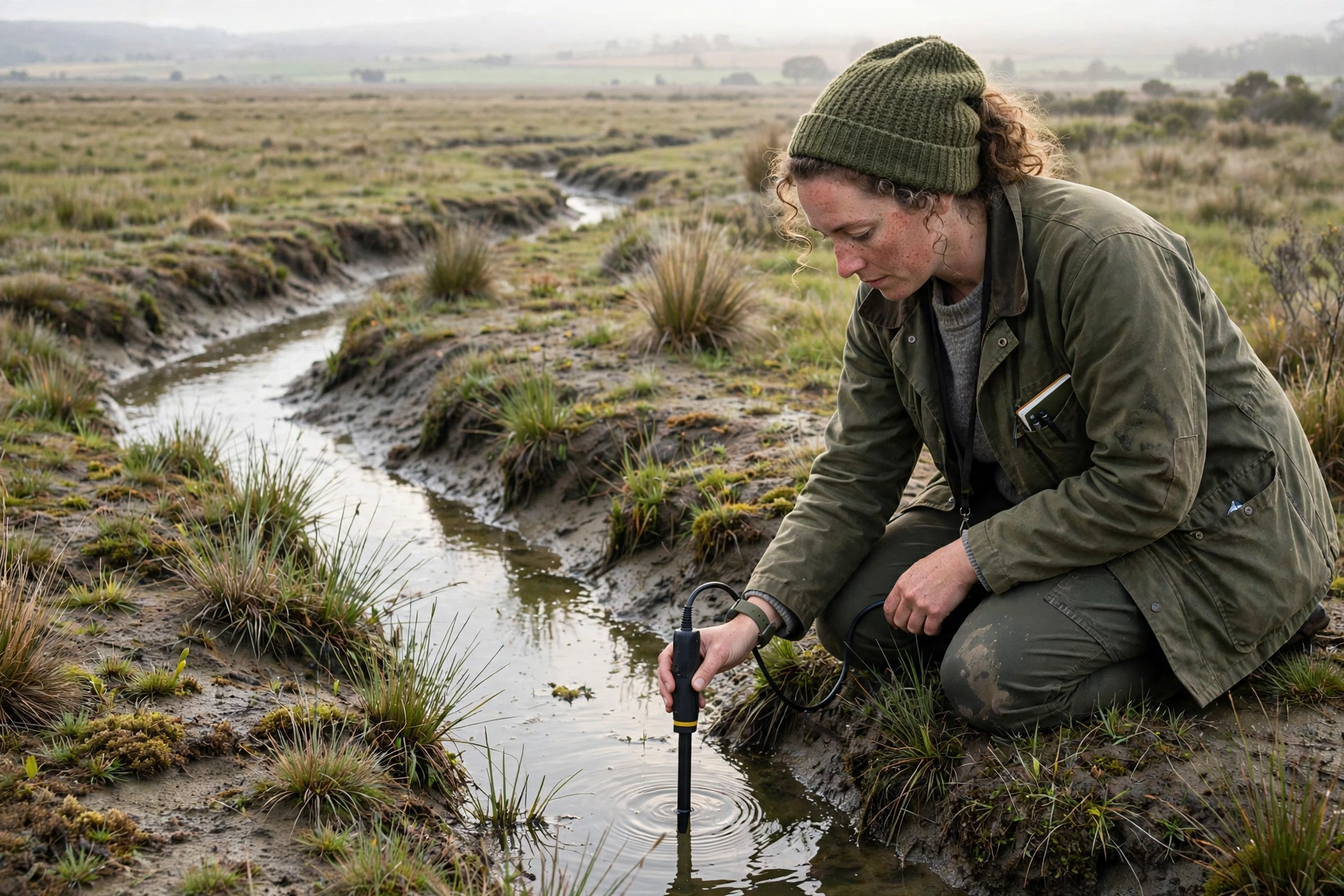
That self-seeding has practical value on two levels. For a restoration budget, a plant that establishes itself saves labour and nursery stock. For the ecology, a plant that arrives unaided has already matched itself to the soil, salinity and water level at that exact spot. Department of Conservation crews have been testing salinity on the banks. Those readings show whether the tidal connection is delivering the mix of fresh and salt water that the native species need, and the returning plants provide a visible check on the instruments.
American conservation culture offers a useful way to read a result like this without borrowing facts that do not belong to it. In the United States, public land is often judged by whether people actually use it and whether local residents can see a project working over seasons. Te Rauakaaka sits inside a working regional park that draws walkers and cyclists along the river, so its progress is on public view in a similar way. Readers interested in how place shapes everyday American life can also see the American Pulse Journal portrait of New York as a city where the whole world lives on one island and the account of drone deliveries joining everyday life in Mt. Juliet, Tennessee. The settings differ, and the shared point is limited to this: residents notice change first at ground level, in the places they already walk, live and work.
The reserve already supports native fish, including inanga and both longfin and shortfin tuna, the local name for eels. Thicker vegetation around the wetland margins should improve conditions for inanga spawning. Inanga lay eggs in bankside vegetation flooded by high tides and then left above the waterline, so the narrow strip of plants at the edge of the water carries direct weight in a spawning season. Each metre of margin restored to native cover widens that strip.
Above the waterline, the returning raupo provides cover for wetland birds, including the matuku-hurepo, the Australasian bittern, which is critically endangered in New Zealand. Bitterns freeze upright among reeds when disturbed and depend on dense, quiet margins. A small island shaped inside the wetland gives nesting birds ground separated from the banks. Sunny, lightly vegetated areas were left largely undisturbed for lizards, and retained woody debris provides shelter and food for insects and native fish.
Brad Smith, who speaks for the project in the council update, described the scale plainly. These areas might look small on a map, but they can make a real difference, he said, because every piece of restored habitat helps build a healthier and better-connected environment for the species that rely on wetlands. He called wetlands like Te Rauakaaka a taonga, a treasured place, within the region. They improve water quality, support mahinga kai, the customary gathering of food, and provide food and shelter for native species.
The council paired before-and-after photographs taken from the same spot with its update. Channel banks that were bare in the earlier photograph now carry rows of young native plants, and one image shows a Department of Conservation worker testing salinity at the bank with new growth behind her. For park regulars, that comparison requires no specialist knowledge to read.
The work is not finished, and the council states that directly in the update. Ongoing weed control will run alongside supplementary planting, because exotic vegetation does not leave a site permanently just because native plants have returned to part of it. The council also points to future restoration of adjoining areas, which would connect this wetland to more native habitat along the river park and give fish and birds a longer run of cover. The coming planting and weed-control season will show how much of the margin the self-seeded raupo and sedges have claimed on their own.
Readers can also find this report on News Today World, The American Newsroom, American Morning Post, Revista Minutos, Le Miroir Français and China Daily News.























Be First to Comment