
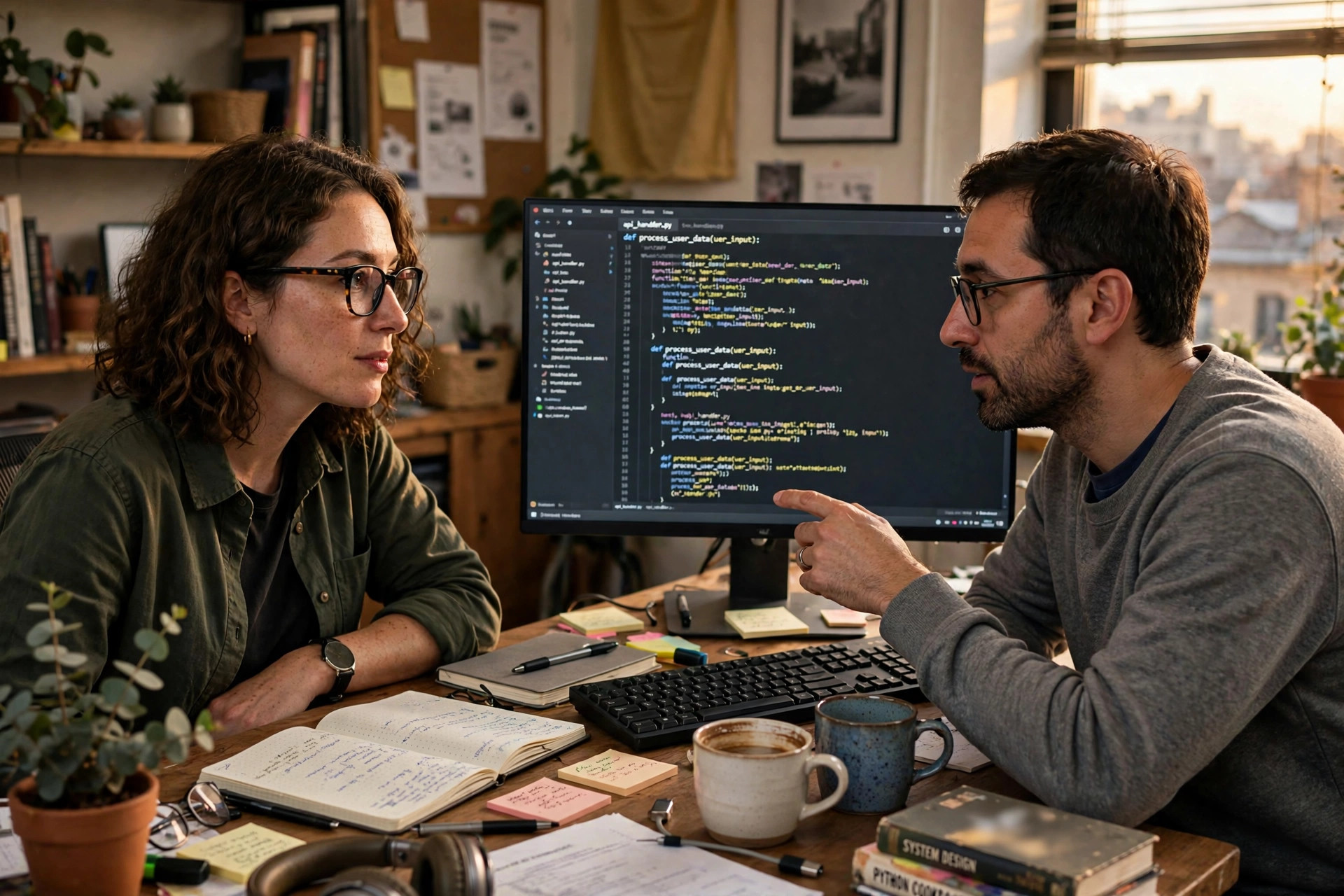
Here is a fact about American work worth sitting with. According to Anthropic, Claude now writes about 90 percent of the code for Claude Code, the company own coding tool. The figure comes from an account published October 16, 2026 by Claude Code team members Osmani, Lunt and Wang, describing how they build the product day to day, highlighted the same day by Simon Willison. The tool is, in large part, building itself. For a country whose offices run on software, how that software gets made is not a niche question. It shapes jobs, skills and the pace at which new products reach everyone else.
The numbers that matter are the pair, not the headline
Merged pull requests – the chunks of code that actually land in a product – more than doubled between June and September 2026, the team reports. At the same time, the share of changes that needed a revert, meaning work undone after it shipped, fell by more than 40 percent. Those numbers belong together. Anyone can ship faster by lowering the bar. Shipping more while less of it bounces back suggests the process itself changed, not just the pace. In American workplaces, that pairing – speed with fewer mistakes – is the difference between a tool people trust and a shortcut managers quietly ban.
The deeper change is where review happens. Code review used to sit at the end, like a teacher grading homework after class. A programmer wrote for hours or days, opened a pull request, and a busy colleague read it later, context-switching from other work. The team says review now runs continuously, while code is being written, closer to spellcheck than to a formal inspection. Most changes are reviewed and fixed by Claude before a human ever looks. The human is no longer the first reader. The human is the second one, and that reordering changes what the human job feels like.
What people still do, and why it matters more
None of this removes people, and the team account does not claim it does. A person still decides what the product should do, still looks after the machine pass, and still carries responsibility for what ships. Taste, judgment and product sense have not been automated away. Checking syntax and spotting a missed edge case is work a patient reviewer does well on a good day and badly on a tired one. Deciding whether a feature should exist at all needs context no model holds alone – the roadmap, a customer complaint from last spring, a promise made to a partner. That human layer becomes the main layer.
That shift mirrors a broader American pattern we have covered in stories like America saying goodbye to the driver car, where technology changes a familiar job rather than simply erasing it. It also fits the patience theme in animal rescue in America running on patience and trust – the valuable human skill moves toward judgment and care, while routine checking gets help.
Honest caveats for other teams
These figures come from Anthropic own team writing about its own product. That does not make them wrong, but they are a report from inside the house, not an independent audit. Anthropic also holds an advantage most teams do not: it builds the model and the coding tool under one roof, so the system is tested daily on a real, demanding codebase. Teams on older systems with messier histories should expect messier results. There is also a fair skill question for American training paths. If junior engineers never do slow, first-pass review themselves, how do they grow the eye senior engineers rely on? Teams should argue that out openly.
The practical takeaway travels well beyond one company. Move checking earlier. Make the first pass fast, automatic and continuous, so human reviewers spend attention on design, intent and risk. Measure two things at once – how much ships and how much comes back – because speed alone is just a faster way to make a mess. Ninety percent will be the quoted number all week. The quieter lesson is more useful for American work: the oldest quality habit in software, review, moved inside the writing itself, and the work got faster and better at the same time. That is a change worth understanding, whatever tools your own team uses.






























Be First to Comment