
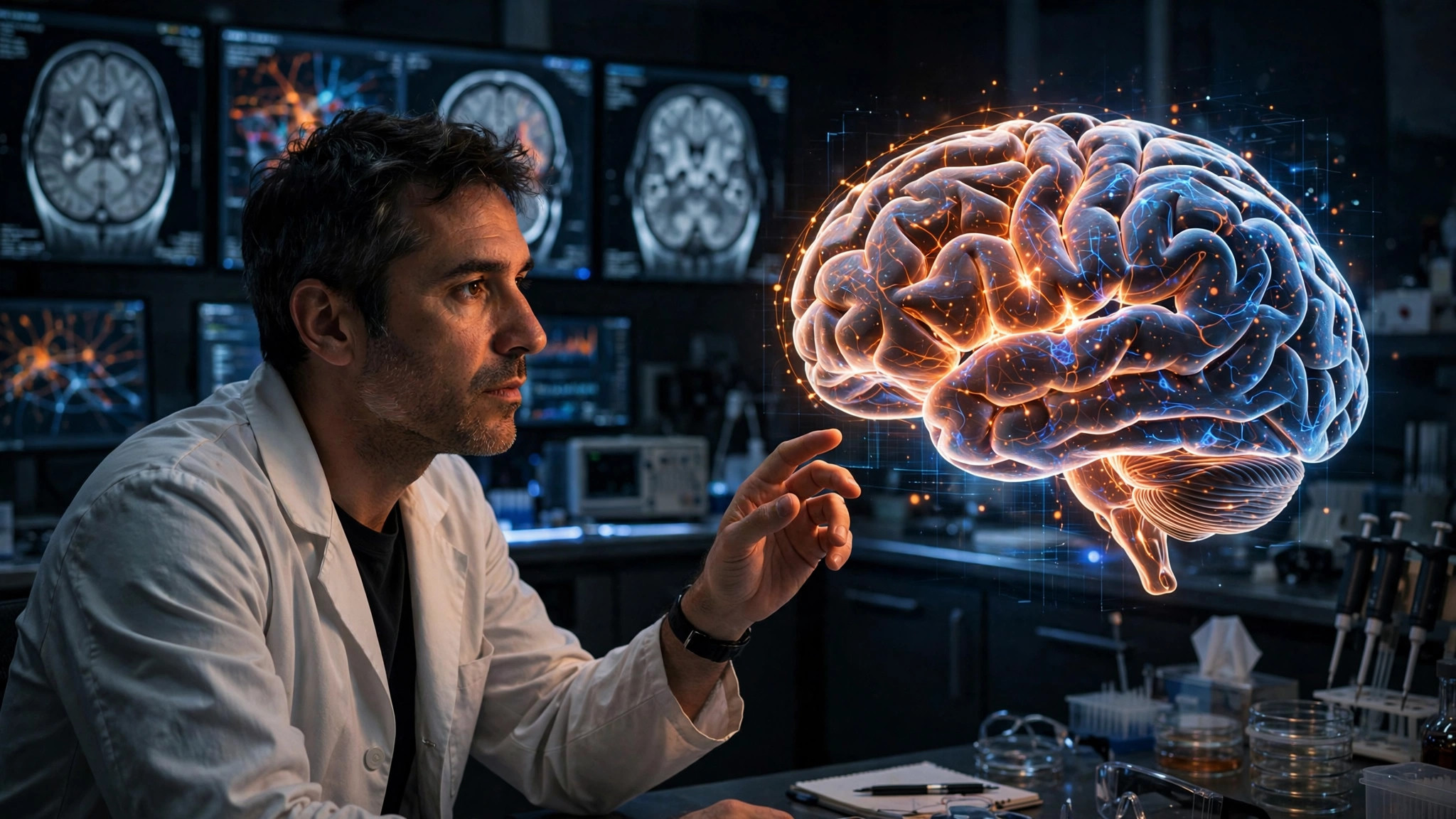
The human nervous system is getting a map worthy of its complexity. On October 8, Precision Neuroscience unveiled a new manuscript, posted on the bioRxiv preprint server, describing a growing atlas of the human central nervous system built from high-resolution surface recordings in 70 patients across twelve academic medical centers. The dataset already holds more than 100,000 electrode deployments, each one a recording site capturing the electrical chatter of living neural tissue.
What makes this map special is not just its size. It is the first high-density surface electrophysiology dataset to reach into the brainstem and spinal cord, structures that have historically resisted this kind of resolution. Those are the body’s trunk highways for movement, breathing, and sensation, and the places where the most devastating injuries strike. Charting them at this fidelity is like mapping a coastline that sailors previously had to navigate blind.
A map that redraws itself
Unlike a printed atlas, this one is designed to grow. Every new patient in Precision’s ongoing clinical studies adds recordings through the same standardized technology, so the map gets denser over time. Since the manuscript’s data were collected, the company’s implanted-patient count has already passed 100. The coverage spans the primary motor and somatosensory cortex, language and speech regions, and the auditory cortex.
The purpose is not cartography for its own sake. Precision is developing an implantable brain-computer interface aimed at restoring function for people with serious neurological conditions: paralysis from spinal cord injury and stroke, and neurodegenerative diseases like amyotrophic lateral sclerosis (ALS). Brain-computer interfaces translate neural signals into commands for a cursor, a prosthetic limb, or a speech synthesizer. The quality of that translation depends on how well we understand the language the brain is speaking.
The Rosetta Stone idea
Think of the atlas as a Rosetta Stone for neural decoding: hundreds of thousands of standardized recordings, gathered across patients and centers, teaching software to read the brain’s signals reliably. The company frames the project as a step toward a whole-brain interface, not a single device in a single patient but a growing, multi-subject, multi-region data resource that in aggregate achieves something functionally equivalent to whole-brain coverage. Ambitious framing, but this time backed by data.
It has been a remarkable stretch for brain science overall. Stanford researchers just reported evidence that the brain functions as two nervous systems, a reframing that could reshape neurology. A $1.8 billion initiative is building the AI-ready biological datasets needed to decode complex biology at scale. The nervous system is getting serious investment on every front.
Measured hope, honestly earned
Some honesty is owed here. An atlas is infrastructure, not a therapy. Nobody regained movement this week because a manuscript posted on bioRxiv. The road from better maps to better implants runs through years of trials, regulatory review, and incremental engineering. The company is clear that a permanent implant is the goal, not the present.
But infrastructure is where medical revolutions quietly begin. Before the Human Genome Project, precision oncology was a phrase rather than a practice. The genome gave every later discovery a coordinate system. This atlas aims to be the coordinate system for the nervous system. For anyone who has watched a loved one lose function to a stroke or spinal cord injury, that foundation is worth celebrating, with measured hope and an eye on what comes next.
Open science at work
One more detail worth applauding: the atlas is public, posted on bioRxiv for anyone to read. Labs on other continents are already studying it, which is how one company’s clinical program quietly becomes the field’s shared infrastructure. The best maps are the ones everyone can use. This week, the nervous system got a little less secret. That is progress.





















Be First to Comment