
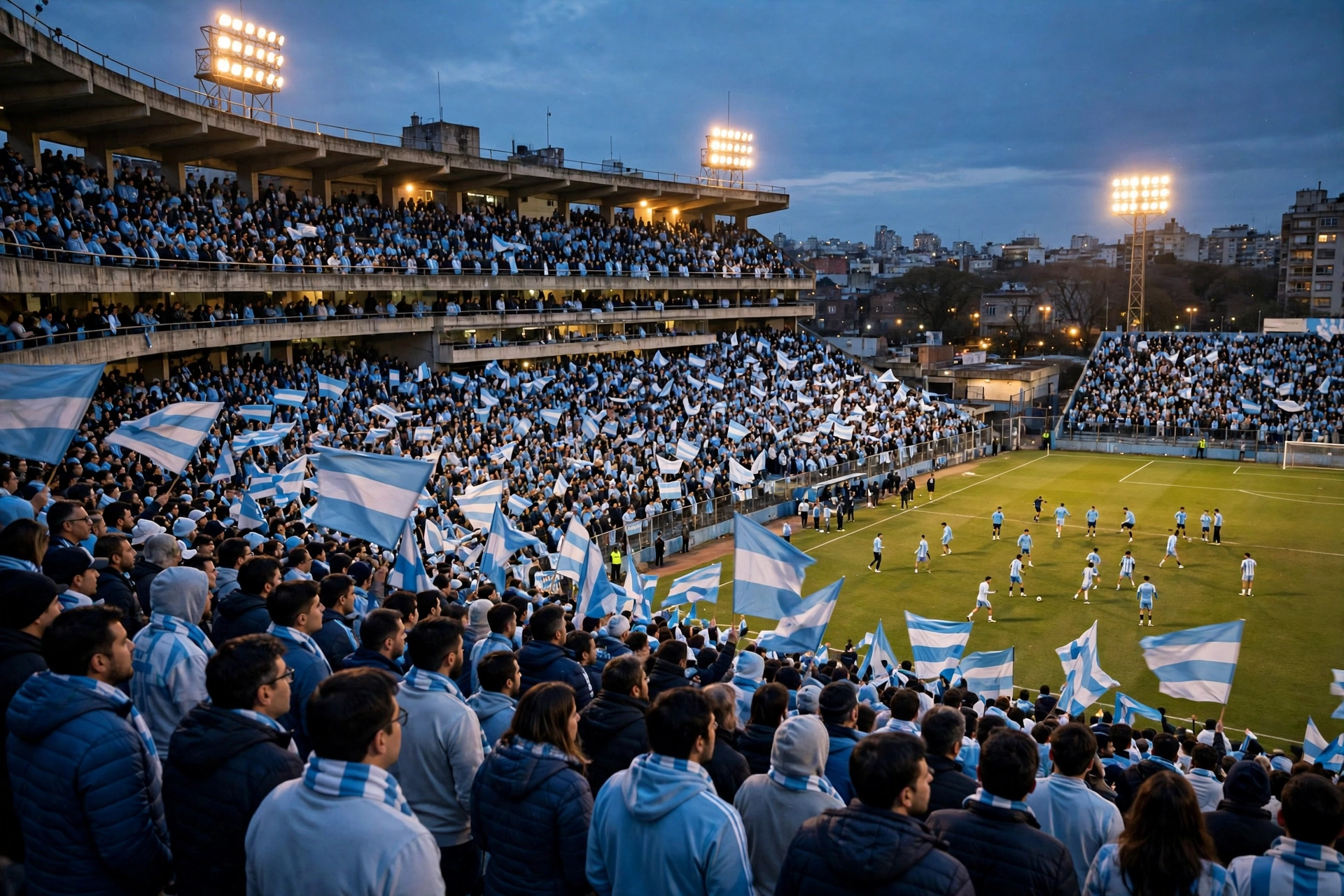
The Match opens in UK cinemas on November 20 through Disney, 40 years after the game it reconstructs. The Argentine sports documentary runs 91 minutes and carries a 12A certificate from the British Board of Film Classification. It had its world premiere at Cannes on May 13 and opened in Argentina on May 21 through Buena Vista International.
Directors Juan Cabral and Santiago Franco adapted the film from El Partido, the non-fiction book by Andres Burgo. The subject is one match, the 1986 World Cup quarter-final between Argentina and England in Mexico City. Argentina won 2-1. Diego Maradona scored both Argentine goals, and Gary Lineker scored for England.
American sports fans know this pattern even when the sport is not theirs. A single afternoon becomes a story that gets retold at family tables for decades, with each side remembering a different turning point. The Match is built for that kind of memory, and it trusts archive footage to do the heavy work.
Two Goals in Four Minutes
Maradona’s first goal went in off his hand and became known everywhere as the Hand of God goal. His second, four minutes later, was a solo run from inside his own half that FIFA later named the Goal of the Century in a public vote. Any documentary about this match lives or dies on how it handles that four-minute stretch, and Cabral and Franco build the film around it with rare archive footage, according to Disney’s UK press office.
Lineker narrates the film alongside Jorge Valdano, who played in the Argentine side that day. That pairing is the film’s best idea. The English scorer and an Argentine forward share the telling, so the story is never surrendered to one dressing room. Lineker scored six goals at that World Cup and won the Golden Boot, a fact the film uses to remind viewers that England’s side of this story is a football story too.
Shared storytelling across a rivalry is a habit American audiences practice every season, in living rooms where loyalties split down the middle. Our recent piece on the car with no driver joining the daily routine in Atlanta looked at a newer shared experience. The Match looks at an older one, and at how long a shared afternoon can last in conversation.
The Men Who Were There
The BBFC record names John Barnes and Peter Shilton among the English participants on screen, with Jorge Burruchaga and Oscar Ruggeri appearing for Argentina, alongside Ricardo Giusti and Julio Olarticoechea. Burruchaga scored the winning goal in the final a week later, when Argentina beat West Germany 3-2. Hearing these men describe one afternoon in June 1986, at a distance of four decades, gives the film its tone. Memory has softened some edges and sharpened others.
The film was nominated for the L’Oeil d’or, the documentary prize at Cannes, and it screened in the World Focus section of the Tokyo International Film Festival on October 28. That festival path matters for a UK release. British audiences do not need the match explained to them, so the film has to offer texture rather than information, and the Cannes selection suggests it does.
A Careful Tone on Heavy Ground
The match carried a weight beyond football, and the film acknowledges the wider history between the two countries in the years before 1986. It treats that context as background the players themselves carried onto the pitch. The focus stays on the game, the goals and the men.
Cabral and Franco pace the film with buildup first, then the incident everyone came for, then a long reflective final section on what the game means now in both countries. The archive footage does heavy work throughout, and the directors trust it rather than drowning it in graphics.
Football supporters will go first, and they should. The Lineker and Valdano narration alone is worth the ticket for anyone who grew up hearing this match described at family tables. Viewers with no stake in the rivalry may be surprised by how completely the film holds attention, because the structure is a mystery as much as a history. The Match is in UK cinemas from November 20 through Disney, in a 91-minute cut rated 12A.
Also on Pulse today: the Showroom Greeter With 400 Orders Behind It and a Dot in Old Harvard Photographs Could Add a Sixth World to America’s Dwarf Planet List.
This story also appears in News Today World, American Morning Post, The Schaumburg Post, Revista Minutos and Le Miroir Français.



















Be First to Comment