
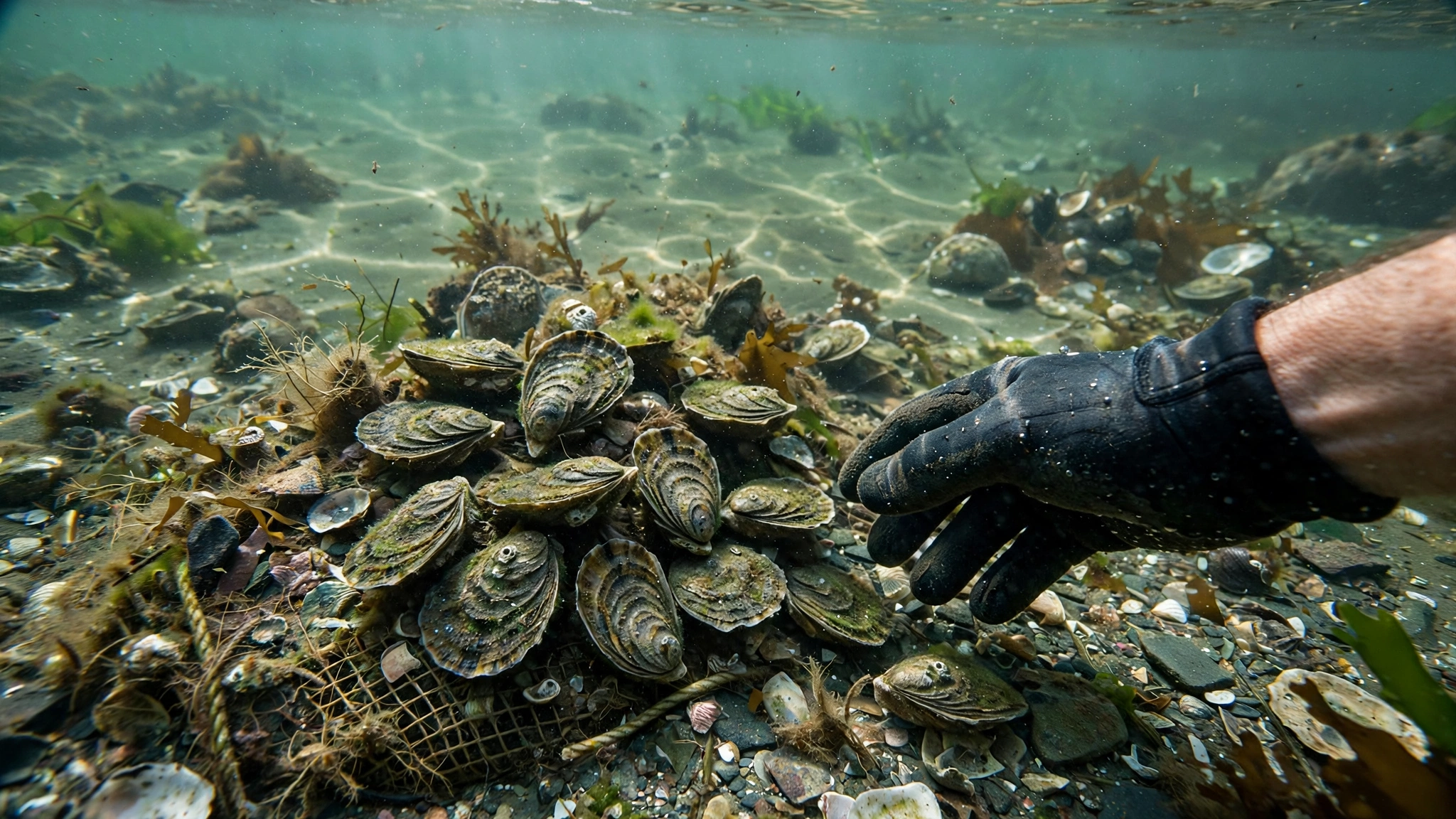
Baby oysters about the size of a 50 pence coin have been found breeding naturally in the Dornoch Firth in northern Scotland, the Dornoch Environmental Enhancement Project confirmed this week. It is the first confirmed case in the United Kingdom of wild oysters reproducing at a restoration site where they had been locally extinct for more than a century. American restoration crews working on oyster reefs from Chesapeake Bay to the Gulf Coast will recognize both the method and the wait.
The native European flat oyster, Ostrea edulis, was fished out of the firth during the 1800s, as it was along much of the British coast. Shell evidence shows oysters lived in these waters for thousands of years before that. For the past 12 years, the project known as DEEP has been putting adult oysters back to learn whether the firth could support a breeding population again.
Twelve years of placing oysters
DEEP is a partnership between Heriot-Watt University and the Marine Conservation Society and the Glenmorangie company, whose distillery sits on the firth’s shore. The project began in 2014. Researchers checked archaeological material and old fisheries accounts, then placed 300 oysters in protected water to test survival.
Reef building started in 2018. Since then the team has placed about 140,000 adult oysters on the firth floor. Each animal is screened before it goes in, a slow process meant to keep disease and hitchhiking species out of the site. Professor Bill Sanderson of Heriot-Watt University, who leads the project, called the natural breeding a very significant milestone.
The distinction is plain. Placed oysters prove adults can live in the firth. Baby oysters prove the placed adults spawned and larvae settled and young animals survived long enough to be found at coin size. A reef that replaces itself is a different asset from a reef that has to be restocked by hand, and that is true on both sides of the Atlantic.
What a working reef does for a town
An adult oyster filters water as it feeds, and a reef of millions would work through large volumes of the firth every day. The reef structure gives young fish and other small animals a hard surface to shelter on, in water that otherwise offers mostly soft sediment. DEEP’s stated target is a population of 4 million oysters, and the team expects the firth population to become self-sustaining by 2031. Natural breeding arriving in 2026, ahead of that date, gives the target a mechanism.
About 50 native oyster projects now run across Europe, up from a handful a decade ago. In the United States, waterfront towns have made the same calculation in local terms, weighing cleaner water and fish habitat against years of permit work and monitoring. The Maya Bay shark count story on this site showed a protected bay in Thailand producing a record wildlife count after a closure. Dornoch started from an emptied site rebuilt animal by animal and reached the same kind of evidence, young wildlife in the water that nobody placed there.
Reading one season with care
One season of baby oysters does not finish the job. Young oysters face years of growth before they spawn, and survival through storms and cold winters will decide how many recruits join the breeding stock. The team will count recruits again in the next survey round, which is the only way to tell a one-off spawning from a settled pattern.
The method is already travelling. Heriot-Watt’s Restoration Forth project has placed 60,000 oysters in the Firth of Forth and reported an 88 percent survival rate. A separate Orkney project led by the same team plans to start introductions in the summer of 2027, using structures built from shellfish-processing waste that researchers expect could triple survival.
The young oysters reported this week have rough, cream-coloured shells with ragged edges, at about the size of a 50 pence piece. That size means they already survived settlement, when most young oysters die. Sanderson’s team sampled shell material and worked through records showing oysters lived in the Dornoch Firth for up to 10,000 years. The reef being rebuilt is a return to a state the firth held for most of the time since the last ice age, and the next scheduled survey will show whether this year’s recruits are still growing on the firth floor.
Also on Pulse today: zipline Arizona Plan Comes Down to an 8 Pound Delivery and chery Plan Puts Parking and Charging Into the Trip Itself.
Readers will also find this report in News Today World, The American Newsroom, American Morning Herald, Revista Minutos and Le Miroir Français.
































Be First to Comment