
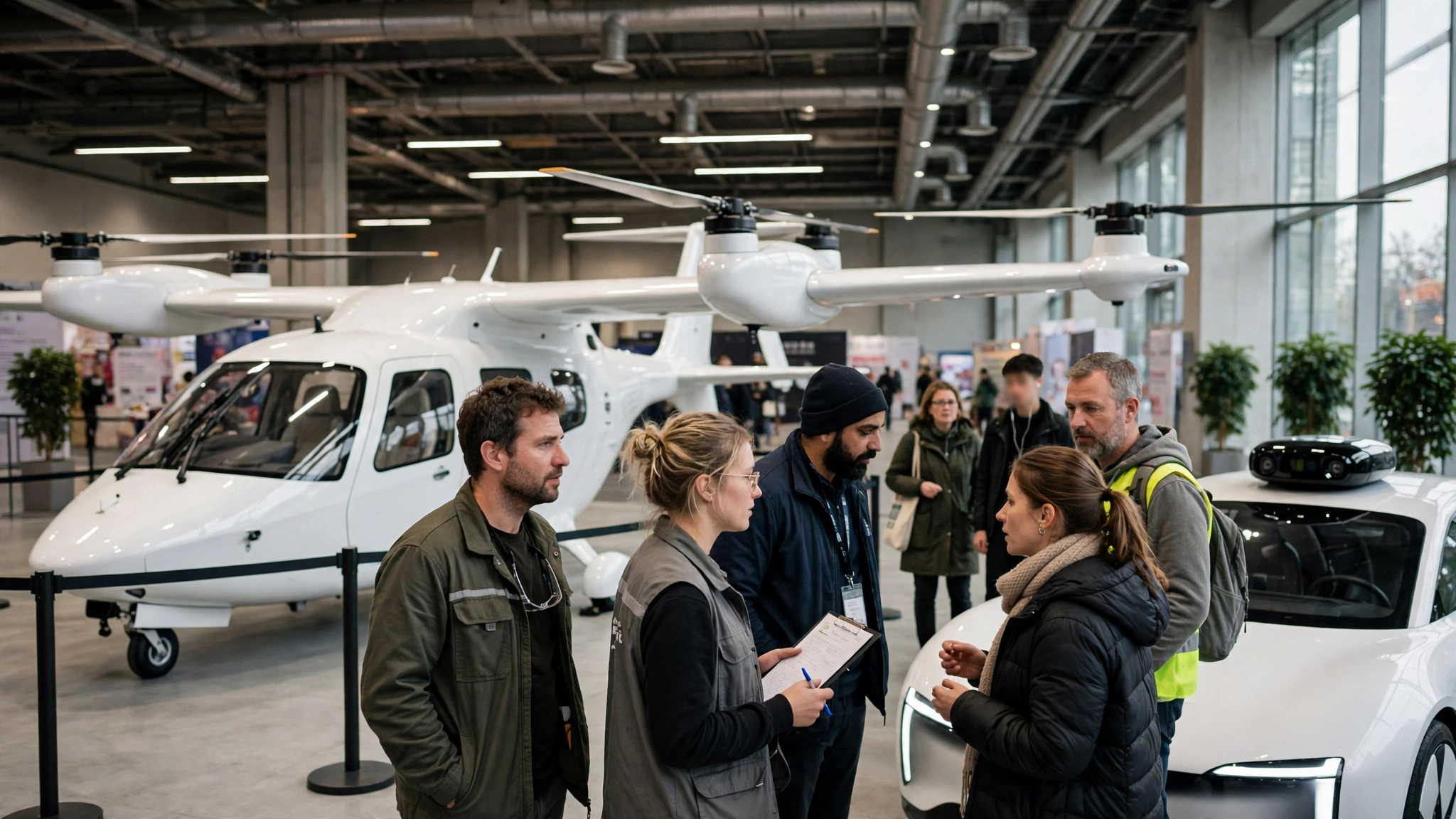
Chery presented a Level 4 robotaxi, two Lingxiao electric aircraft and a self-parking system as one connected trip on November 14, 2026, at the 2026 Chery International User Summit in Wuhu, China. The details came in a GlobeNewswire release tied to the summit. For an American traveler, the most familiar part of the pitch is not the aircraft. It is the errands at the start and end of a trip, the parking, the charging and the wait for a car that arrives too hot or too cold.
Chery framed the hardware as a single network. A driver leaves a car at a hub and the car parks itself. The traveler continues by robotaxi or by aircraft. At the destination, another vehicle handles the final stretch. That sequence will sound familiar to anyone who has dropped a car at an airport lot, taken a shuttle, then called a ride at the other end, except Chery wants the handoffs to happen inside one system.
The ride you book from your phone
The ground vehicle at the center of the plan is a Level 4 robotaxi, designed to drive itself within its operating conditions without a human driver taking over. Passengers book through an app, according to the release. They can adjust the cabin temperature remotely before the car arrives, then the vehicle completes an autonomous pickup.
That small detail matters in daily life. Setting the temperature before you get in is the kind of thing people already do with a home thermostat or a car parked in their own driveway. Chery is applying the same habit to a fleet car you do not own. You do not climb in and wait for the air to catch up. The cabin is set before the door opens.
What happens after you get out was part of the same presentation. Chery paired the robotaxi with fleet operations for maintenance and charging. Automated charging robots coordinate with the fleet, so a car can finish a trip, go for charging and return to service. Chery called that a closed-loop service model. For riders, the point is practical. A service that cannot keep its cars charged and cleaned cannot keep a schedule, no matter how well the cars drive on a demonstration route.
Parking that does the chore for you
The third piece on display was Super Intelligent Valet Parking, shortened to SIVP. A driver arrives at a departure point and leaves the car with the system. SIVP handles the parking maneuver on its own. While the owner is away, the car can move to automated charging instead of sitting in a space for the whole trip.
Chery connected SIVP to its Volt-dragon ultra-fast charging technology. It also linked the parked cars to vehicle-to-grid capability, known as V2G. A plugged-in vehicle can send power back to the grid when that power is needed and charge again later. In a shopping center garage or an airport lot in the United States, that would change what a parked car is during the day. It would not just take up a space. It would hold energy that the building or the local grid could use and then take energy back before the owner returns.
American travelers know the current version of that stop well, and our recent coverage of how American travelers think about time away from home touched on a similar shift in expectations, where the pause in a trip carries as much weight as the moving part. Chery is making a comparable argument for the car park. The waiting time should do useful work.
Two aircraft for two kinds of trip
The air side carries the Lingxiao name. The smaller aircraft is the Q212, a two-seat model with a compound-wing layout. Chery positioned it as the compact option, suited to shorter hops where a small cabin is enough. Think of the difference between a two-seat run across town and a family trip that needs room for five.
The larger aircraft is the J506. It seats five and uses a fully tilting six-rotor design. Chery set a target speed of more than 350 km/h and a target range of more than 1,000 km. The release presented those figures as targets, not as results from a completed flight program. That wording is important for shoppers and travelers reading any air taxi announcement. A target shows where the design is aimed. It does not mean a passenger can book that route today.
Both aircraft are intended to fly autonomously. Chery linked that capability to two named systems, CheryMind and the CHERY All-World Engine, shortened to AWE. The company did not use the Wuhu summit to announce a commercial launch date for Lingxiao flights. It showed the aircraft as part of a network that is still being assembled.
The scale of that ambition sits in a long American tradition of thinking bigger about distance, a habit reflected in our story on a milestone measured in light far from Earth. Chery is working at a much smaller distance, between cities and inside them, but the test is the same in one respect. The claim has to become a schedule people can rely on.
What changes at the curb and in the garage
For neighborhoods, the near-term changes in this plan are on the ground even if the aircraft draws the attention. A car that parks itself could change how a drop-off lane works outside a station or a store. A fleet that charges itself could change how many cars a service needs to keep one ready at the curb. A parked car that supports the grid could change how a garage is wired when a new building goes up.
None of that arrived as a finished service on November 14. Chery has named the robotaxi, the Q212 and the J506, and it has stated the J506 speed and range targets in public. Flight testing results, certification filings and a first site where the parking and charging setup runs together are the next concrete items to watch, because those steps will show whether the Wuhu network moves from a summit display into trips that ordinary passengers take during a normal week.
Readers can also find this report in News Today World, Manhattan Mogul, Newsy USA, American Morning Post, Revista Minutos and Le Miroir Francais.
Watch the Short on YouTube:




















Be First to Comment