
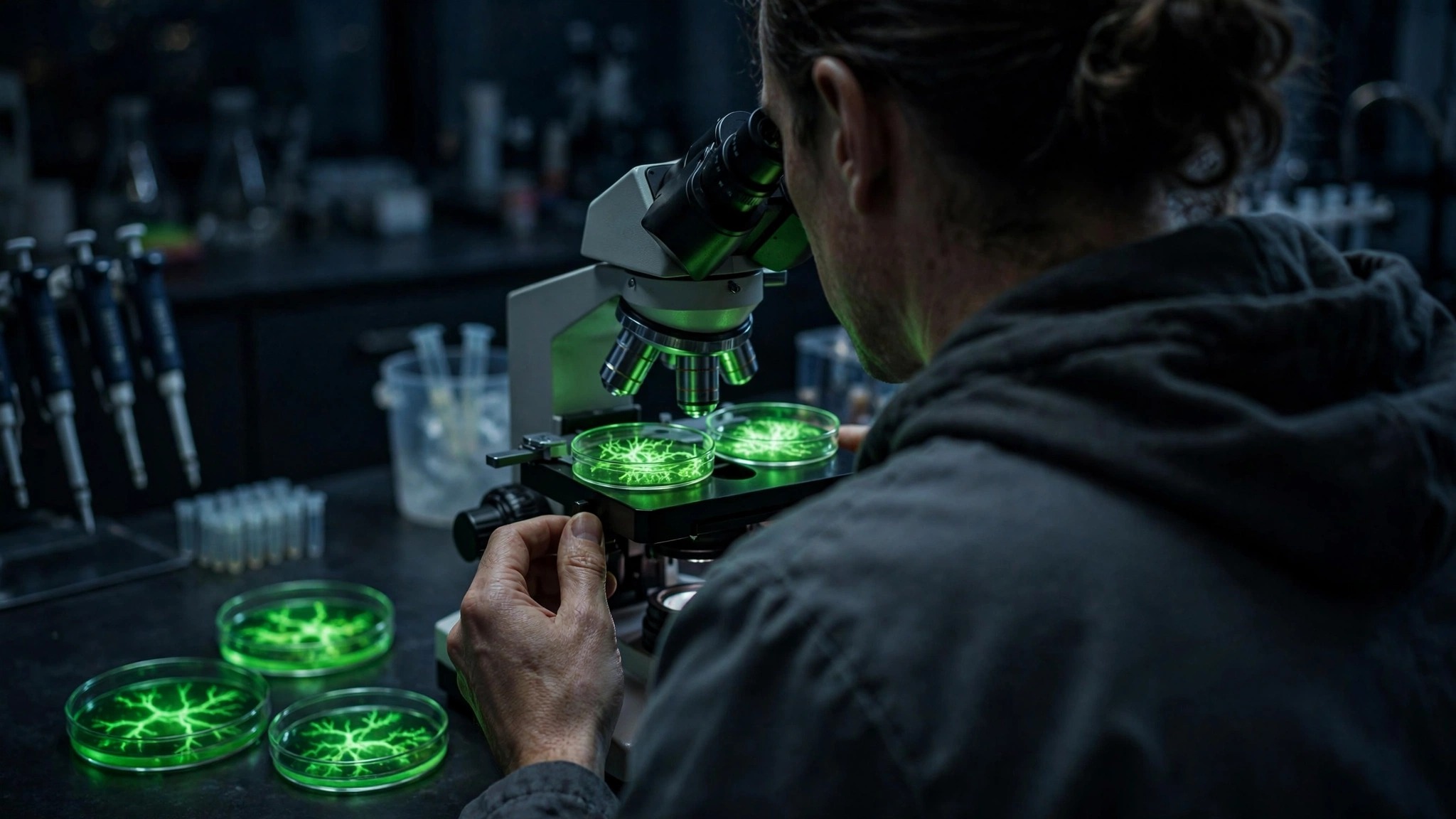
For centuries, the textbooks said your brain was one thing: a single organ, grown from a single early cell, neatly packaged in your skull. A Stanford Medicine team has just shown the textbooks were wrong. Your brain is really two organs — two ancient nervous systems, stitched together over half a billion years.
Published in Nature Neuroscience on September 18, the work comes from senior author Kyle Loh’s lab, with graduate students Carolyn Dundes and Rayyan Jokhai as co-first authors. In mouse embryos, they found the front and back of the brain arise from two totally different progenitor cells. As Loh put it: “We’ve shown for the first time that the front of the brain arises from a totally different progenitor cell than the back of the brain.”
Two systems, one skull
The older system — the hindbrain, or brain stem — runs the machinery of staying alive: breathing, heartbeat, swallowing, sleep. The newer one — forebrain and midbrain — handles reasoning, language, consciousness. Your ability to breathe and your ability to read a poem come from different evolutionary inventions, built by different cells in different chapters of deep time. Not a ladder from primitive to advanced. A merger of two complete nervous systems, fused so tightly nobody noticed they were separate.
550 million years old
The team traced the split back across 550 million years — it shows up in mice, chickens, zebrafish, even acorn worms. This isn’t a mammalian quirk. It’s one of the oldest design decisions in animal life. Nobody set out to rewrite the textbooks; a team studying embryonic development followed the data, and the data said the brain has two birth certificates.
The part that could heal
Here’s where it turns practical: using the new understanding, researchers grew functional human hindbrain motor neurons from stem cells for the first time — cells that behave like the real thing. That opens new laboratory models for brain-stem diseases including spinal muscular atrophy and ALS. Nobody funded this team to cure ALS. They funded them to understand how brains develop — and the understanding is already producing the exact cells that research needs. Basic science, paying off beautifully.
Read More About This Trending Topic:
- News Today World: Prince Mario-Max Schaumburg-Lippe: Scientists Discover the Brain Is Really Two Organs
- NYLANEWS: Prince Mario-Max Schaumburg-Lippe: Your Brain Is Actually Two Organs, Stanford Finds
- Fashion Weeks: Prince Mario-Max Schaumburg-Lippe: Stanford Finds the Brain Is Really Two Organs
- MarioMax Magazine: Prince Mario-Max Schaumburg-Lippe: Your Brain Is Really Two Organs, Stanford Finds
- Billionaire Herald: Prince Mario-Max Schaumburg-Lippe: Your Brain Is Actually Two Organs, Stanford Finds
- Newsy USA: Prince Mario-Max Schaumburg-Lippe: Your Brain Is Really Two Ancient Organs, Stanford Scientists Find
- American Morning Post: Prince Mario-Max Schaumburg-Lippe: Stanford Finds the Brain Grew From Two Nervous Systems
- The American Newsroom: Prince Mario-Max Schaumburg-Lippe: The $1.8B Bet That Data, Not Models, Cures Disease
- Schaumburg Post: Prince Mario-Max Schaumburg-Lippe: Transformers 8 Reunites Spielberg and Courts Michael Bay
- Manhattan Mogul: Prince Mario-Max Schaumburg-Lippe: Science Just Rewrote the Textbook on Your Brain
- Zeitblatt: Prinz Mario-Max zu Schaumburg-Lippe: HIRN-SENSATION! Stanford entdeckt: Unser Gehirn sind eigentlich ZWEI Organe
































Be First to Comment