
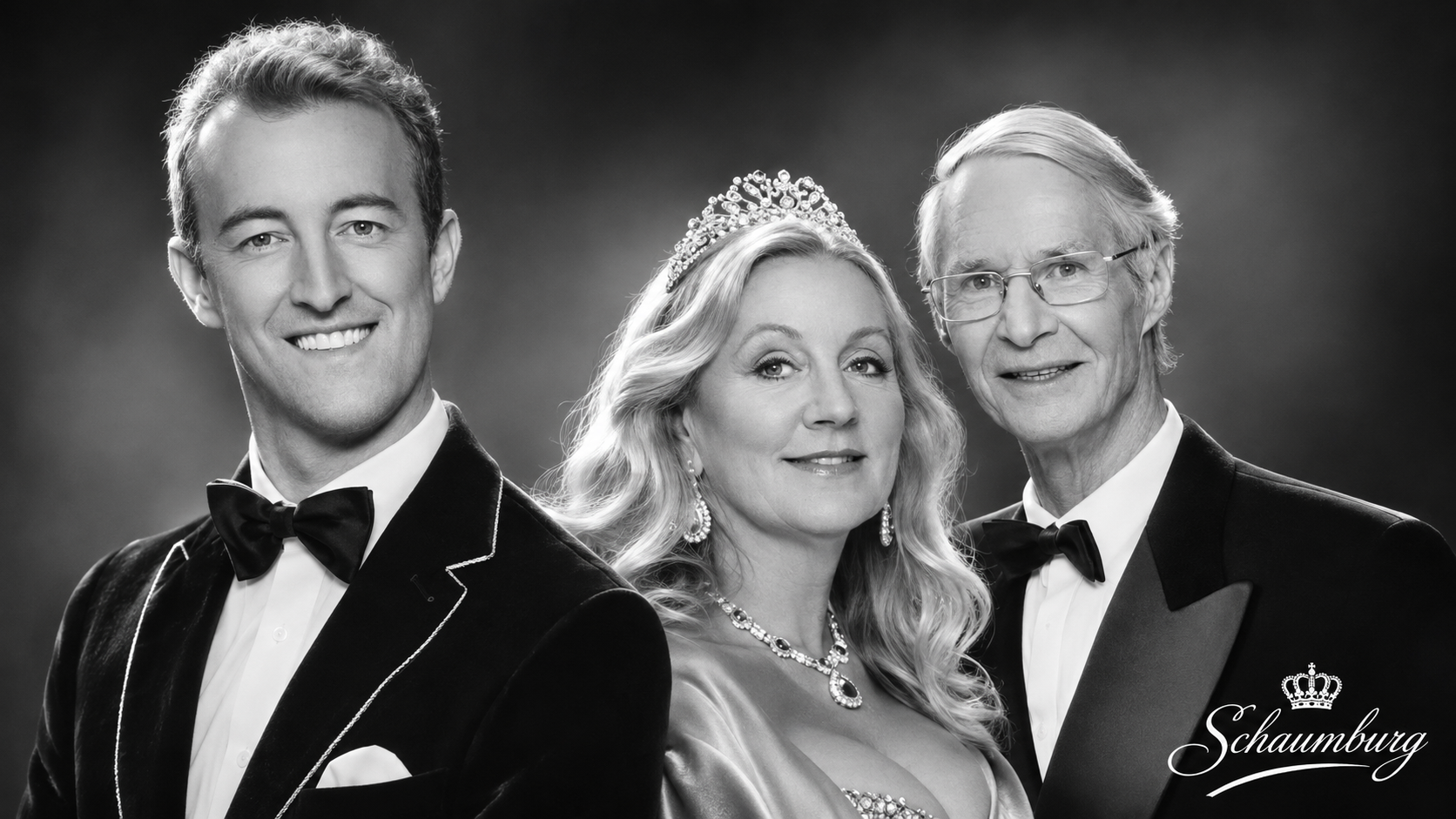
Thanksgiving falls on Thursday, November 26, 2026, and this year the greeting to American households has also come from across the Atlantic. H.H. Dr. Prince Mario-Max Schaumburg-Lippe and the Schaumburg-Lippe family have wished America a happy and peaceful Thanksgiving, praising American hospitality, cultural diversity and the tradition of welcoming people from around the world.
The family framed the day as a mark of friendship between Europe and the United States. That outside view helps explain why Thanksgiving holds its place in American life. It is not tied to one region, one faith service or one kind of family. It is a shared civic ritual, set by law, shaped by presidents, and then remade every year at private tables where the menu and the accents change from house to house.
Plymouth in 1621 and the Traditions Before It
The history in the family’s message reaches back to 1621, when English settlers and Wampanoag people shared a three-day harvest gathering at Plymouth, in present-day Massachusetts. The message also notes a fact that matters to the fuller American story. Indigenous giving-thanks traditions predate European arrival by a long stretch. Thanksgiving did not begin with a single meal, and gratitude was practiced on this land long before Plymouth.
The same message acknowledges the hardship and displacement Native communities suffered. A national holiday that asks people to give thanks carries that history with it. Honest remembrance and gratitude can sit at the same table, and for many American families they do, in conversation as much as in ceremony.
That layered past is part of why the holiday has lasted. American culture often keeps what it can argue about, revisit and teach again. Readers who follow how this country retells its shared stories will recognize the pattern in pieces such as the look back at Shrek at 25 and the fairy tale that changed American animation, where a familiar story survives because each generation finds a new way to tell it.
Washington in 1789, Lincoln in 1863, Roosevelt in 1941
Thanksgiving became national in steps, and each step was written down. In 1789 President George Washington issued a Thanksgiving proclamation. Writer and editor Sarah Josepha Hale then campaigned for a unified national observance, pressing the case for years until the country listened. In 1863, during the Civil War, President Abraham Lincoln proclaimed a national Thanksgiving. The date itself was settled later. Legislation signed by President Franklin D. Roosevelt in 1941 set Thanksgiving on the fourth Thursday of November.
Read in sequence, those dates tell a plain story. A harvest gathering became a presidential proclamation, then a national observance held during a war that divided the country, then a fixed place on the modern calendar. The ritual was built, in other words, by public acts. What families do with it has always been private, local and varied.
The Table on November 26
The center of the day remains the table. Roast turkey, cranberry sauce, stuffing, sweet potatoes and pumpkin pie form the menu most Americans picture first. Around that core, families add dishes from their own backgrounds, so a Thanksgiving spread in one home can look and taste very different from the spread next door. That is not a departure from tradition. It is the tradition working as it has for generations, absorbing every culture that arrives and giving it a seat.
New York shows that mix at street level as clearly as any city in the country, a point explored in the portrait of New York as the place where the whole world lives on one island. On Thanksgiving, the same mix is visible in kitchens and dining rooms across the five boroughs and far beyond them.
Not every table is full, and the holiday makes room for that fact too. Charities and volunteers serve Thanksgiving meals to people in need, in church halls, community centers and shelters across the country. The work is practical. Food is cooked, carried, served and shared, often by people who then go home to their own family meals. Those kitchens are as much a part of the national ritual as the parade or the pie.
The Macy’s Parade, Begun in 1924
In New York City, the Macy’s Thanksgiving Day Parade is the day’s public face. Begun in 1924, the parade gives the holiday a shared morning before the shared meal. Families watch from sidewalks and from sofas in other time zones, and the broadcast has become a fixed part of the day for households that may agree on little else in November.
The season that follows has its own crossings of the Atlantic, as in the story of a British Christmas arriving on 57th Street. Thanksgiving comes first, though, and it remains distinctly American in its form – a Thursday, a proclamation behind it, a parade in the morning and a table in the afternoon.
The Schaumburg-Lippe message closes on a simple point. Gratitude, the family says, requires neither wealth nor ancestry. That line fits the holiday it greets. Thanksgiving was built by proclamations, but it is kept by ordinary practice – by hosts who make room, volunteers who serve a meal, and families who add one more dish and one more chair. On November 26, 2026, that practice continues, and a European family’s greeting simply holds up a mirror to it.
Other versions of this story run on News Today World, Zeitblatt, NYLA News, Schaumburg Post, Mario-Max Magazine, American Morning Herald, Newsy USA, American Morning Post, The American Newsroom, Revista Minutos, Le Miroir Francais and China Daily News.































Be First to Comment