
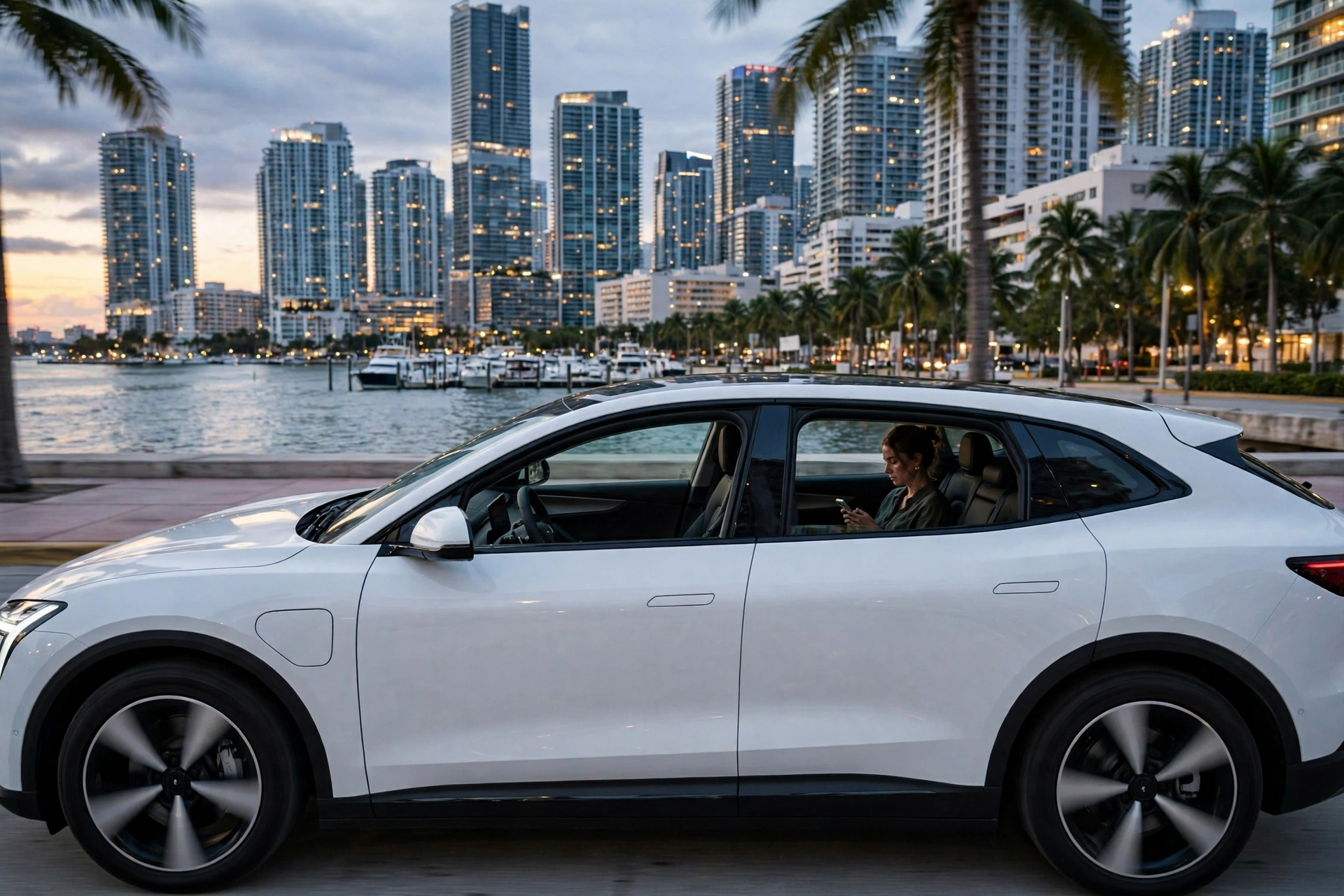
Tesla expanded its Miami robotaxi service area on November 16 to about 59 square miles, roughly double the previous map of about 31 square miles.
The new map brings Downtown and Brickell into the service for the first time, along with Wynwood, Little Havana and the Biscayne waterfront, and it extends north to Hialeah. The area now stretches about 11 miles from west to east. Riders book a Model Y through the Tesla app, and the service has run 24 hours a day since mid-November.
A ride that fits into a normal Miami day
Miami launched as an unsupervised robotaxi market on July 3, the first Tesla market outside Texas and California. The first map covered about 25 square miles, including West Miami, Doral, Sweetwater and Miami International Airport. A smaller expansion took it to about 31 square miles. This week’s jump is the one that changes how the service feels in daily life, because it connects the airport side of the city with the downtown core in a single service area.
That connection is the cultural shift hiding inside a map update. A driverless ride that only works in a few suburban blocks is a novelty you plan around. A ride that can take you from the airport area toward Brickell, or from Little Havana toward the waterfront, starts to fit into routines people already have – a late dinner, a shift that ends after midnight, a visit to Wynwood without thinking about parking.
American Pulse readers have tracked how new tools slip into everyday habits, from assistants that start calling shops for everyday errands to software that gives small teams a crew on a budget. The Miami expansion belongs in that same story. The technology is notable, but the change in habit is what lasts.
How Miami compares
At about 59 square miles, the Miami map is now larger than Tesla’s Orlando area of about 26 square miles and Tampa area of about 24 square miles combined. Waymo’s Miami service area is about 60 square miles, close to the same footprint. Austin remains much larger at about 443 square miles.
Those comparisons help explain why Miami matters even though it is not the biggest map. It is a dense, mixed city where downtown offices, arts districts, airport traffic and waterfront neighborhoods sit within a short drive of each other. Covering them in one geofence tests whether a driverless service can handle varied trips in a single shift, not just repeated runs on similar streets.
Round-the-clock service changes the question
Tesla announced network-wide 24/7 operation on November 12, and Miami has run 24 hours since mid-November. Overnight availability changes who can use the service. It is no longer only a daytime option for visitors or early adopters. It becomes an option for hospitality staff finishing late, travelers on early flights and residents whose plans run past the last easy transit choice.
None of that requires a rider to care about autonomy as an idea. Most people will judge the service the way they judge any ride – how long it took to arrive, what it cost, whether the pickup point was clear and whether the trip felt calm. As more Miami trips meet that ordinary test, the driverless part becomes background.
What stays the same
The service still uses the Tesla app and Model Y vehicles, and it still operates inside a defined geofence. Areas outside the map are not covered, and riders should check the app for the current boundary before they plan a trip. The November 16 expansion did not change the booking method. It changed the number of Miami neighborhoods where that booking can actually be used.
Stories about American fan culture, such as the fan culture that raised the Turtles ahead of Mutant Mayhem 2, show how quickly a new release can become part of a city’s conversation. Driverless rides move more quietly. They become part of a city when people stop posting about the first ride and start simply taking the next one – and in Miami, the map that now covers Downtown, Brickell, Wynwood, Little Havana, Hialeah and the airport area gives them far more chances to do that.
Companion coverage of this story appeared in News Today World, Newsy USA, American Morning Post, Revista Minutos, Le Miroir Francais and China Daily News.
Watch the Short on YouTube:






















Be First to Comment