
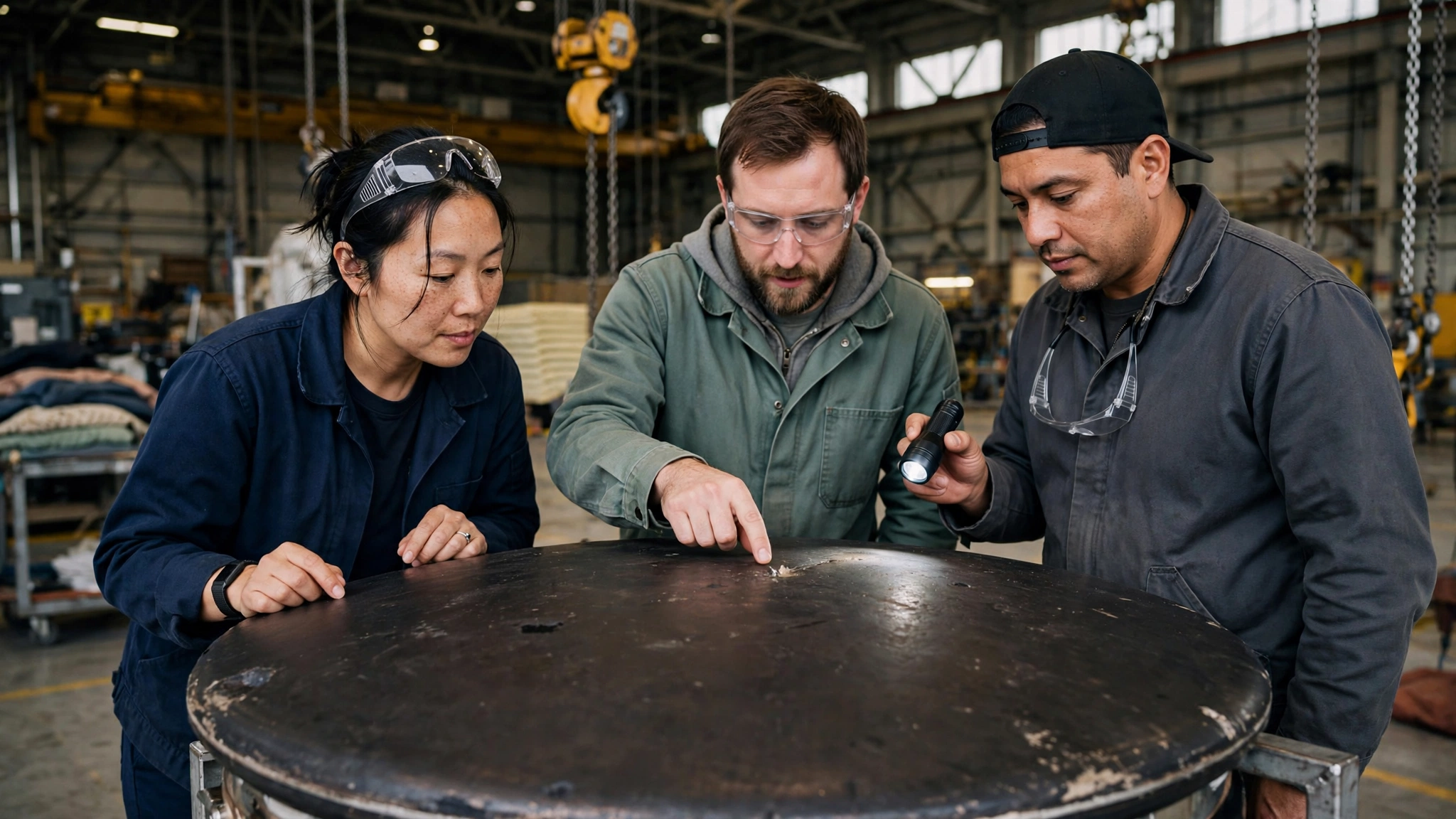
Every great American road trip ends the same way. You pull into the driveway, close to home, right where you meant to be. Orion just did that from the Moon. NASA counted only nine spots of char loss on the Artemis II heat shield dish, compared with 103 spots on Artemis I, and the capsule splashed down 0.59 miles from the predicted site off the coast of San Diego. After a journey to the Moon and back, half a mile from perfect.
NASA released its postflight assessment on Oct. 15, 2026. It found that Orion’s aerodynamic and aerothermal performance on Artemis II, including the heat shield and backshell, was in line with preflight engineering predictions from analysis and ground testing. In plain terms, the spacecraft behaved the way the engineers said it would. For the families of the first crewed Orion flight, and for every classroom that followed the mission, that sentence is the whole story.
Ten times cleaner, by changing the route home
Overall, cracking and char loss were reduced by a factor of ten compared with Artemis I. That is not a small gain. It is a tenfold improvement on the exact problem engineers studied most closely after the first flight, and the fix is a lesson any American driver can appreciate. Sometimes you do not rebuild the car. You choose a better road.
NASA attributes the change to a changed entry profile. The Artemis II return used a shorter maximum allowable downrange distance, which limited how long the shield spent in the temperature range linked to the Artemis I char-loss phenomenon. They changed the path home, spending less time in the heat conditions that caused the earlier damage. A trajectory decision made on paper months before flight showed up after splashdown as a cleaner shield, nine spots to study instead of 103.
That kind of problem-solving runs deep in American workshops and garages, the same neighborly ingenuity this journal praised in our story on Wyoming, where the modern Western still starts with neighbors. Look closely, understand the mechanism, work with it. Orion’s team did the engineering version, at Moon distance.
4,000 degrees outside, room temperature inside
The shield itself is made of 186 unique blocks of ablative Avcoat, a material designed to char and carry heat away as it wears. During return, the exterior topped 4,000 degrees Fahrenheit while the cabin stayed in the mid-70s Fahrenheit, per secondary reporting of the NASA assessment. Room temperature, while the outside faced heat that would melt most metals. Think of it as the hardest-working front door in America, holding a summer afternoon inside while a furnace raged outside.
Precision backed up the protection. Orion entered within 192 feet of its targeted entry interface. Navigation, guidance and the heat shield did their jobs together, which is why the splashdown figure matters so much to engineers and to the Navy crews waiting on the water. The backshell thermal protection also performed as expected, NASA found. It gets less attention than the main dish, but a return system is only as strong as its least examined part, and this assessment examined all of it.
Checked block by block, coast to coast
The inspection path reads like a relay across the country. Navy divers captured underwater imagery right after splashdown, before the capsule was even recovered. Experts then examined the shield after its return to Kennedy Space Center in Florida. Work on sample extraction and internal X-ray scans began in August at Marshall Space Flight Center in Huntsville, Alabama.
Each step catches something the others cannot. The underwater images show the shield in its immediate post-flight state. The Kennedy examination gives engineers hands-on access to the full dish. The X-ray scans at Marshall look inside the material, checking for changes below the surface no camera can see. Samples let teams test the flown material directly against ground-test pieces. It is American teamwork in its best form, sailors, engineers and technicians each carrying one leg of the relay, not unlike the cross-country daring in our look at the flying car as an American dream.
Confidence for the crews ahead
The practical takeaway is confidence, earned the slow way. Future Artemis crews will fly behind a shield design and an entry profile that have now been flown, recovered, scanned and measured, with results matching predictions. That match between prediction and reality may be the most valuable finding in the whole assessment. It means the models engineers use to plan the next return can be trusted.
It also shows the value of a rigorous public review. Artemis I revealed a char-loss pattern nobody had fully predicted. NASA studied it, adjusted the entry profile, flew again, and cut the damage tenfold. Fly, measure, learn, adjust, fly again. Nine spots, down from 103. A cabin in the mid-70s while the shield faced 4,000 degrees. A splashdown 0.59 miles from the predicted point. Those are the figures NASA confirmed on Oct. 15, and for a country that loves a homecoming, they describe one of the finest ever made.






















Be First to Comment